
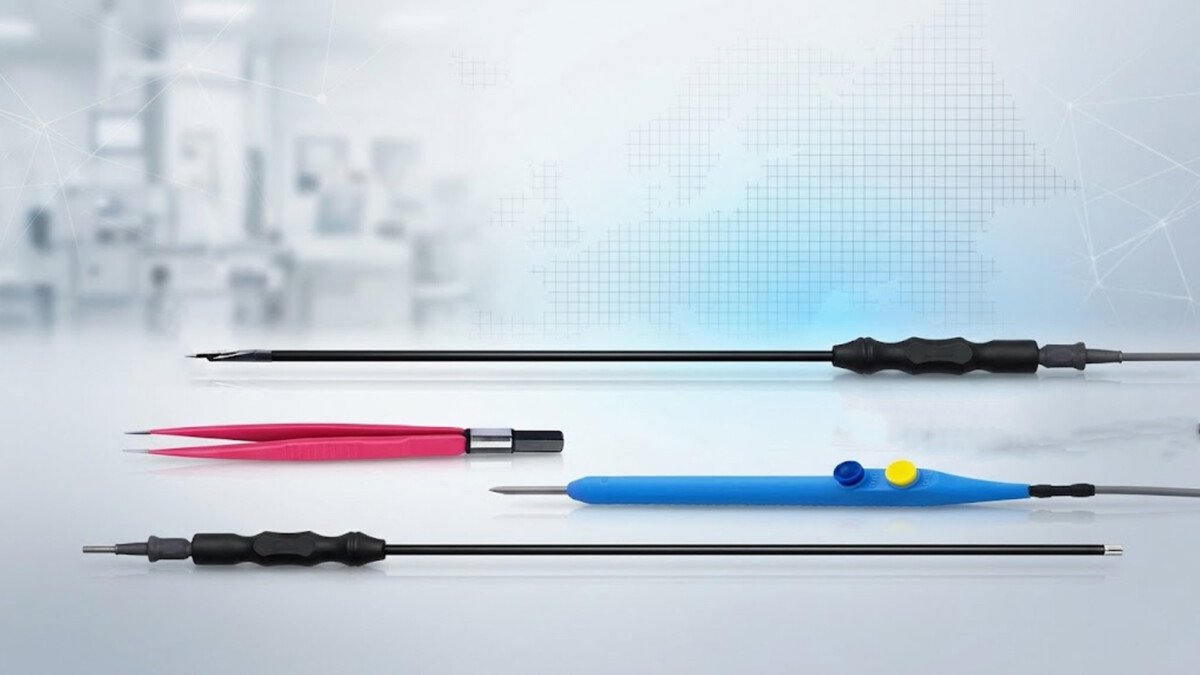
 A manufacturer-selection guide for electrosurgical, single-use HF and minimally invasive product portfolios
Choosing a medical technology manufacturer requires more than finding the right broad product category. Hospitals and distributors need a manufacturing partner that can identify instruments accurately, provide relevant product documentation, explain connected HF and MIS categories, support sample evaluation and maintain clear commercial communication for repeat purchasing.
A professional medical technology manufacturer should provide clearly defined products, technical information, controlled references, appropriate documentation and reliable communication throughout sampling, quotation and repeat supply. For electrosurgical and minimally invasive products, buyers should also confirm instrument dimensions, sterile presentation and compatibility with the intended HF equipment.
What Professional Buyers Need From a Medical Technology Manufacturer
A manufacturer supplying hospitals and medical distributors should make product evaluation straightforward.
Professional buyers should be able to determine:
- what the manufacturer produces;
- how individual product families differ;
- which specifications identify each reference;
- whether the product is single-use or reusable;
- whether sterile presentation applies;
- which connected accessories are required;
- what documentation is available; and
- how the product can be reordered.
Seemann Technologies specialises in single-use HF instruments and single-use MIS instruments, with reusable HF product categories also presented on the company website.
A Focused Electrosurgical Product Range
One advantage of a focused manufacturer is that related products can be organised around a defined technology area rather than an unrelated catalogue.
Seemann’s current single-use HF structure includes:
- sterile bipolar forceps;
- non-stick bipolar forceps;
- forceps with cable configurations;
- single-use monopolar electrodes;
- arthroscopic electrode options;
- specialised electrodes;
- bipolar forceps cables; and
- related HF product categories.
The MIS product structure adds bipolar and monopolar minimally invasive instruments, laparoscopic electrodes and suction-irrigation products.
Product Specifications Should Be Easy to Verify
A product catalogue is useful only when the buyer can understand the differences between closely related references.
Depending on the product, useful specifications can include:
- overall length;
- working length;
- shaft diameter;
- tip or jaw geometry;
- straight, angled or bayonet configuration;
- standard or non-stick format;
- cable configuration;
- connector;
- sterile status; and
- manufacturer reference.
Seemann procurement insight: Manufacturing capability is most useful to a professional buyer when it is translated into controlled product references. A hospital or distributor should be able to move from catalogue review to sample, quotation and repeat order without losing the original specification.
Single-Use HF Instruments
Seemann Technologies manufactures sterile single-use HF products for open and minimally invasive surgery.
Its bipolar forceps range currently includes straight, angled-tip, bayonet, non-stick, cable-connected and irrigation configurations.
The monopolar electrode range includes short and long 2.4 mm and 4 mm shaft families, arthroscopic electrodes and specialised products.
These are strong examples of why buyers should evaluate specific configurations rather than only a broad manufacturer description.
Single-Use MIS Instruments
Minimally invasive product supply requires different instrument architectures from open HF surgery.
Seemann’s MIS range includes:
- bipolar dissection and grasping forceps;
- bipolar scissors;
- monopolar dissection and grasping forceps;
- monopolar scissors;
- monopolar electrodes for laparoscopy; and
- suction/irrigation instruments.
This enables distributors to discuss both HF and MIS requirements while keeping each individual product family technically separate.
Compatibility Support Matters
Electrosurgical products should not be selected independently from their associated interfaces.
Where relevant, buyers should provide:
- HF equipment manufacturer;
- equipment model;
- instrument reference;
- cable reference;
- connector requirement;
- handpiece interface; and
- existing compatible product information.
A manufacturer should respond to these details rather than making an unsupported claim of universal compatibility.
Quality and Product Documentation
Medical distributors and hospitals need company-level quality information as well as product-specific documentation.
Seemann publishes information about its quality management and medical-device standards on its website. Professional buyers should still request the current conformity and technical documents that apply to the exact devices being considered.
This distinction is important because a general quality certificate does not replace the product-specific evidence needed during procurement or market assessment.
Samples Should Be Controlled by Product Reference
When samples are requested, the quotation should identify the same reference that was evaluated.
A buyer may check:
- instrument dimensions;
- working end;
- shaft;
- cable or connection;
- sterile packaging;
- labelling; and
- technical information.
If a sample is modified before commercial production, the updated specification should be approved separately.
Repeat Supply and Distributor Planning
For a medical distributor, the first order is only one part of supplier evaluation.
The relationship also needs to support:
- forecast volumes;
- repeat ordering;
- controlled product references;
- communication about changes;
- documentation requests;
- new product enquiries; and
- customer-specific requirements.
Clear manufacturer communication helps distributors answer hospital questions without creating their own unverified technical descriptions.
Belgium: Manufacturer Evaluation for Medical Distribution
Belgian distributors evaluating an electrosurgical or MIS manufacturer should examine product specifications and documentation alongside their own economic-operator obligations.
The FAMHP currently requires medical-device distributors to follow applicable Belgian registration requirements. Importers also need to consider the current EUDAMED actor-registration framework.
A manufacturer enquiry should therefore include the exact products and documents required by the Belgian buyer.
Spain: Product and Commercialisation Information
Spanish buyers should ensure that manufacturer documentation can support their applicable AEMPS and commercialisation responsibilities.
AEMPS currently maintains RECOPS for economic operators commercialising medical devices in Spanish territory. Product, UDI, labelling and instructions for use may form part of the applicable national process depending on the product and role.
This makes accurate product identification particularly important when building a Spanish distributor portfolio.
Ireland: Distributor and Importer Requirements
Irish distributors and importers should first determine their role in the medical-device supply chain.
HPRA publishes separate information for distributors and importers, including the applicable national and EUDAMED registration pathways.
A manufacturer supplying Ireland should therefore be prepared to provide clear product and documentation information for the buyer’s review.
Manufacturer Evaluation Checklist
- Does the manufacturer actually produce the product category required?
- Are individual references and configurations clearly identifiable?
- Is technical documentation available?
- Can sterile status and packaging be confirmed?
- Can HF compatibility questions be reviewed?
- Can samples be connected to an exact commercial reference?
- Can related HF and MIS categories be discussed together?
- Can repeat quantities be planned?
- Are product changes communicated clearly?
- Can destination-market documentation requirements be discussed?
Frequently Asked Questions
What products does Seemann Technologies manufacture?
Seemann Technologies focuses on single-use HF instruments and single-use MIS instruments, including bipolar forceps, monopolar electrodes, cables and minimally invasive product families.
Does Seemann manufacture non-stick bipolar forceps?
The current catalogue includes several sterile non-stick bipolar forceps configurations.
Does Seemann offer monopolar electrodes for laparoscopy?
Yes. Laparoscopic monopolar electrode products form part of the company’s MIS and HF instrument structure.
Can buyers review reusable HF products as well?
Yes. Seemann’s website also presents a reusable HF instrument category.
What should a distributor send when asking for a quotation?
Send exact product categories, specifications, equipment information where relevant, quantities, destination, sample requirements and required documentation.
Can one manufacturer discussion cover HF and MIS products?
Yes. Related categories can be discussed together, while each individual product still requires separate specification and compatibility review.
Discuss Your Surgical Product Requirements
Medical distributors, hospitals and healthcare procurement organisations in Belgium, Spain and Ireland can review Seemann Technologies’ complete surgical product range. For product specifications, catalogue information, samples or commercial enquiries, contact Seemann Technologies.