
 Evaluate product scope, compatibility support, documentation and repeat-supply readiness
A dependable electrosurgical instrument supply relationship begins with accurate product data. Hospitals and distributors need to know which configurations are available, how connected components are identified, what documentation supports the exact reference and how an approved item will move from evaluation to repeat order.
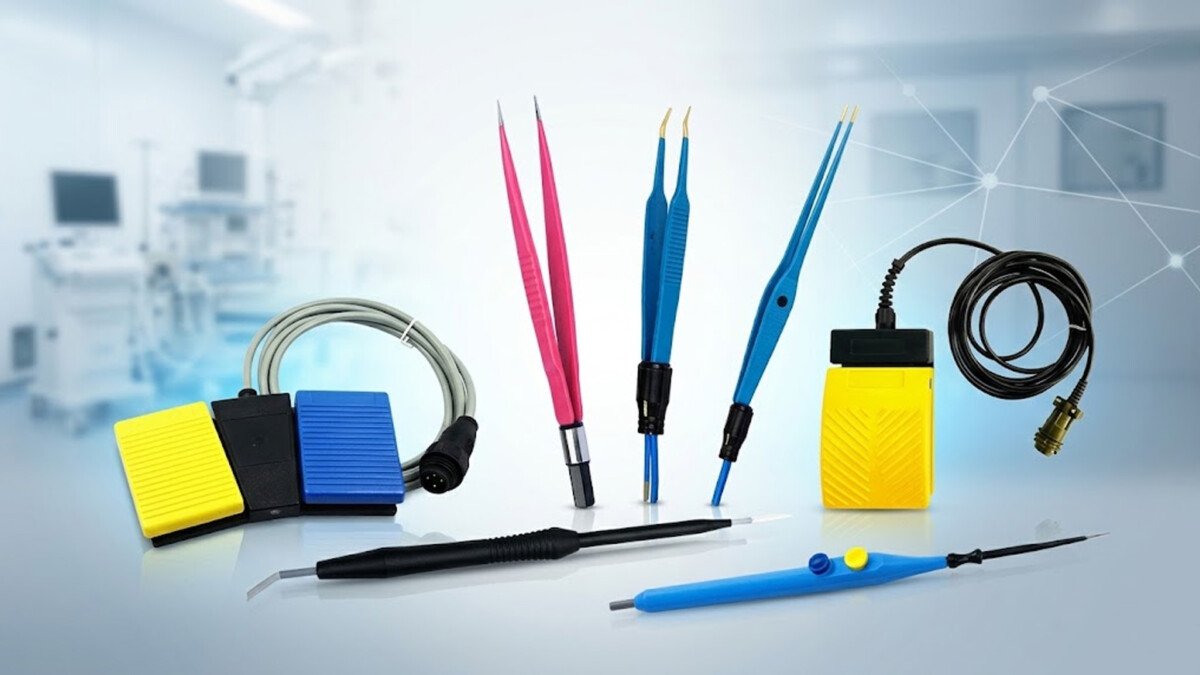
A professional electrosurgical instruments supplier should provide a clearly structured range, reference-level specifications, compatibility information for connected components, relevant product documentation and responsive commercial support. Seemann Technologies offers verified HF and MIS categories for hospitals, surgical centres and medical distributors, including bipolar forceps, monopolar electrodes, cables, HF handles and laparoscopic instruments.
Supplier evaluation is different from manufacturer selection
A manufacturer-focused review asks who makes a product and how manufacturing quality is controlled. A supplier-focused review asks whether a buyer can identify, assess, order and replenish the correct reference with the necessary information. The two questions overlap, but they do not serve the same commercial intent.
For hospitals, supplier performance affects product evaluation, purchasing records and continuity. For distributors, it also affects catalogue accuracy, quotation quality, customer support, forecasting and traceability. A broad claim about being a medical-device partner is less valuable than a precise answer about a particular forceps, electrode, cable or HF handle.
Start with a verified, navigable product range
An electrosurgical instruments supplier should organise products by the decisions buyers actually make. Seemann’s complete product overview separates single-use HF instruments, reusable HF products and single-use MIS instruments. That structure helps a distributor move from a hospital requirement to the relevant category without treating unrelated products as interchangeable.
Bipolar forceps
The verified single-use bipolar forceps range includes standard and non-stick versions in straight, angled-tip and bayonet patterns. Seemann also publishes cable-connected and irrigation configurations. Buyers should compare pattern, length, tip and cable arrangement independently.
Monopolar and specialised electrodes
The published monopolar electrode category includes short and long 2.4 mm and 4 mm shaft options, arthroscopic electrodes, a tungsten electrode and conisation electrodes. It also lists bipolar electrodes with cable for ENT. Modality and product family must remain visible in every catalogue record.
Bipolar forceps cables
Seemann lists single-use bipolar forceps cables as a distinct category. A distributor should connect each cable discussion to the relevant instrument and HF equipment rather than selling by connector appearance alone.
HF handles and electrodes
Seemann uses the product wording “HF handles with cables and electrodes”. Buyers may refer to cautery pencils or electrosurgical pencils, but the supplier should translate the enquiry into an exact handle, control, electrode, cable and equipment requirement.
Single-use MIS instruments
The single-use MIS portfolio includes bipolar dissection and grasping forceps, bipolar scissors, monopolar dissection and grasping forceps, monopolar scissors, laparoscopic monopolar electrodes and suction/irrigation instruments.
What professional buyers should expect
| Supplier capability | Evidence a buyer can request | Commercial value |
| Clear product scope | Current catalogue, category structure and exact references | Faster qualification of relevant products |
| Technical product data | Dimensions, pattern, tip, shaft, cable and packaging details | More accurate comparisons and tenders |
| Compatibility support | Reference-level instrument, cable and equipment information | Fewer assumptions during product review |
| Documentation support | Applicable label, IFU, conformity and UDI information | Supports hospital and distributor approval processes |
| Commercial readiness | Quotation, unit of sale, sample terms and current lead time | Creates a workable route from evaluation to order |
| Repeat-supply control | Reference consistency, forecasts and change communication | Protects continuity after approval |
Specifications should be built around product identity
Professional procurement cannot rely on shortened names such as “bipolar forceps”, “electrode” or “diathermy pencil”. Each may cover several configurations. The supplier should help the buyer retain the attributes that distinguish one reference from another.
For forceps, these commonly include straight, angled-tip or bayonet pattern; standard or non-stick designation; length; tip; and cable arrangement. For electrodes, the record may need modality, product family, form, shaft diameter, relevant length and handle or cable connection. For HF handles, control method and both cable ends may also be required.
Numerical specifications must come from the current manufacturer information for the exact reference. A distributor should not combine dimensions from several products into a new sales description.
Compatibility support must cover the complete connection
Electrosurgical products often form a connected system: instrument or electrode, cable or handle, equipment-side connector and HF equipment. A supplier can support the review by asking for every relevant reference rather than giving a broad brand-level assurance.
- Identify the exact instrument or electrode.
- Record the cable or HF-handle reference.
- Describe both connection ends.
- Provide the HF equipment manufacturer and full model.
- Check the current product documentation.
- Retain the approved combination in the buyer’s product record.
Seemann’s single-use HF technology information places forceps, electrodes, cables and HF handles within the same portfolio. This product relationship supports a compatibility-first enquiry without implying that Seemann manufactures electrosurgical generators.
Seemann procurement insight: A useful supplier enquiry contains the current instrument, cable and HF equipment references before price is requested; technical clarity prevents an attractive quotation from describing the wrong configuration.
Documentation should match the exact reference
Hospital procurement, distributor quality teams and importers may require different evidence. Depending on the device and commercial role, the document set can include the current product specification, label and packaging information, instructions for use, EU Declaration of Conformity, relevant certificate information and UDI details where applicable.
A company-level certificate or quality statement does not replace device-specific evidence. Seemann’s quality information provides a starting point, while the buyer should request the applicable documents for each shortlisted reference.
Document version control also matters. Distributors should record when information was received and how updates will be communicated to affected customers. Requirements should be confirmed for the particular device and country of supply.
Packaging data affects the entire buying process
Packaging is not an administrative detail. Hospitals need it for item creation, storage and stock handling; distributors need it for warehouse records, pricing and delivery planning. The supplier should state the unit of sale, unit packaging, outer packaging and other current reference-level information requested by the buyer.
Where a product is single-use and sterile, those attributes should be supported by the exact product information. Shelf life and storage conditions must also be verified rather than inferred from another item in the range.
Samples need a controlled evaluation route
Sending an unspecified sample rarely resolves a procurement question. A useful sample request states the exact reference, evaluation objective, quantity, delivery location and documents required. Where the review includes connection to existing HF equipment, the equipment model and cable arrangement should be recorded in advance.
The outcome should be linked to the evaluated reference. If the pattern, length, connector or packaging changes, the buyer should decide whether further review is necessary. Sample availability and conditions remain subject to commercial confirmation.
Hospital procurement and distributor procurement have different priorities
Hospital procurement
Hospitals usually work from an approved clinical requirement. Their priorities include the correct product configuration, technical review, documentation, unit of sale, evaluation process and continuity. Procurement must ensure that the description on the purchase order matches the approved reference.
Distributor procurement
Distributors need the same product accuracy plus a scalable way to serve multiple customers. They should build structured product records, decide which configurations to hold or offer by enquiry, and preserve traceability across quotations and orders.
Private clinics and surgical centres
Smaller organisations may have shorter approval routes but still need the same compatibility and documentation discipline. A limited number of HF equipment models can simplify the enquiry, provided the exact model and connector are supplied.
Preparing a supplier request for quotation
- State the product family and exact configuration required.
- Provide the current reference or complete replacement specification.
- Record dimensions, pattern, tip, shaft and electrode form where relevant.
- Identify cable, handle, connector and HF equipment details.
- Confirm single-use or reusable status and required packaging information.
- List all product and conformity documents needed for review.
- State sample quantity and evaluation objective.
- Provide initial order quantity, annual forecast and destination.
Compare offers on technical and commercial equivalence
Begin with mandatory specification fields and ask each supplier to state compliance or departure. Compare like with like: a cable-connected forceps is not commercially equivalent to an instrument requiring a separately priced cable, and a different packaging unit can distort the apparent price.
After technical review, compare documentation completeness, unit of sale, sample terms, current lead time, delivery conditions and communication arrangements. Price becomes meaningful only when the proposed references satisfy the same requirement.
Designing a distributor portfolio
A strong portfolio is focused enough for sales teams to understand and broad enough to answer recurring hospital needs. Distributors can organise the range around bipolar forceps, electrodes, cables, HF handles and selected MIS instruments, then identify connected products within each customer discussion.
Core references may be selected from demonstrated demand, while specialist patterns or electrodes remain available for qualified enquiry. The catalogue should avoid unsupported phrases such as “universal connector” and should never rename electrodes as forceps.
Repeat supply and change communication
An approved product must be easy to reorder under the same manufacturer reference and description. Distributor and hospital systems should retain packaging, unit-of-sale and connection data instead of shortening the item name over time.
Forecasts help the supplier understand demand, but current availability and lead time must be confirmed during commercial discussions. Buyers should also establish how relevant product, packaging or documentation changes will be communicated.
Questions to ask a prospective supplier
- Which exact configurations are currently documented?
- Can the supplier provide reference-level dimensions and packaging data?
- What information is required for a compatibility review?
- Which documents can be supplied for hospital or distributor evaluation?
- How are samples identified and controlled?
- How should forecasts and repeat orders be communicated?
- How are relevant product or documentation changes shared?
Frequently Asked Questions
What should an electrosurgical instruments supplier provide?
Buyers should expect clear product categories, exact references, current specifications, connected-component information, applicable documentation and a practical quotation and repeat-order process.
Which electrosurgical products does Seemann publish?
The verified range includes bipolar forceps, monopolar and specialised electrodes, bipolar forceps cables, HF handles with cables and electrodes, and single-use MIS instruments.
Can a supplier confirm compatibility from a connector photograph?
A photograph can support identification, but compatibility should be reviewed using exact instrument, cable and HF equipment references together with current documentation.
What information belongs in a distributor catalogue?
Retain the manufacturer reference, accurate product name, defining technical attributes, supply format, packaging information and relevant documentation identifiers.
Can hospitals request product samples?
Sample availability and terms should be confirmed directly. A request should include the exact reference, evaluation purpose, quantity, destination and associated equipment where relevant.
How should monopolar electrodes be recorded?
Use the exact manufacturer reference and product name. Seemann’s verified open-surgery HF category lists single-use monopolar electrodes, and “forceps” and “electrode” should not be used interchangeably.
Does supplier status mean Seemann manufactures electrosurgical generators?
No. The verified public portfolio supports electrosurgical instruments and accessories; it does not establish generator manufacture.
Discuss Your Product Requirements
Provide the required product family, configuration, current reference, connection details, HF equipment model, documentation needs, sample quantity and expected demand. Seemann Technologies can then support a focused product, catalogue or quotation discussion.
Discuss hospital procurement, distributor supply or an electrosurgical instrument quotation.