
 Turn clinical requirements into documented, compatible and repeatable supply specifications
Sourcing electrosurgical instruments for Spain requires more than identifying a broad product family. Hospitals, distributors and importers need accurate catalogue references, documented connections, current product information and a clear understanding of their role in the Spanish supply chain.
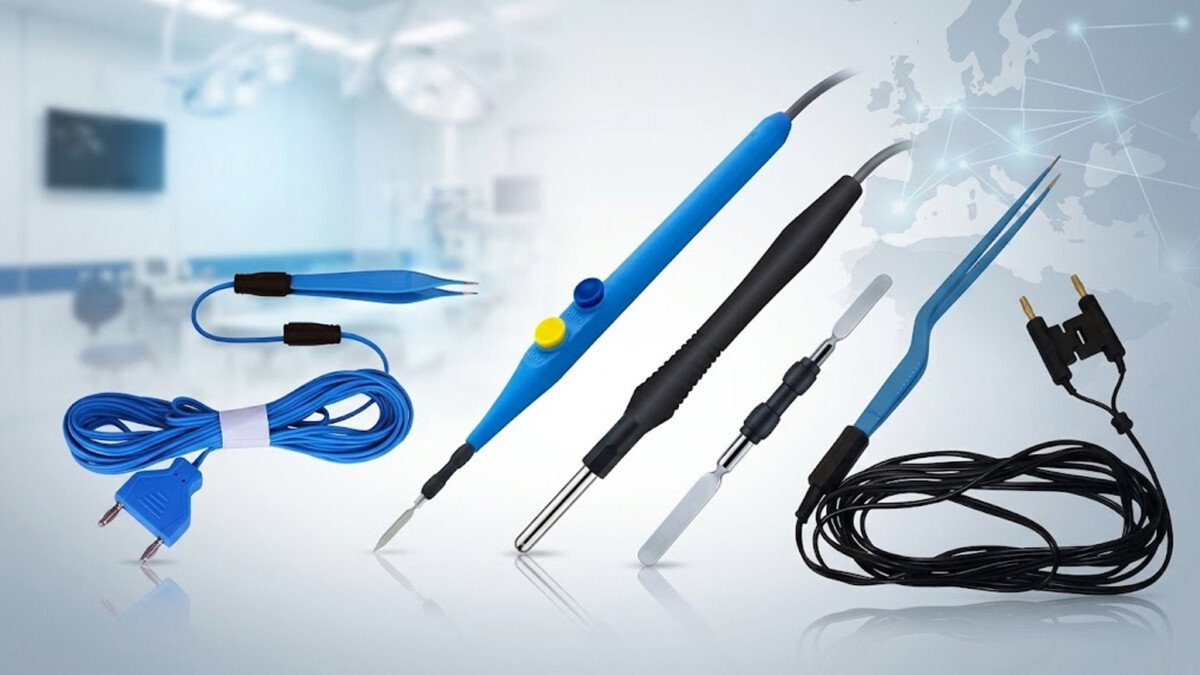
Professional buyers sourcing electrosurgical instruments in Spain should compare the instrument configuration, single-use or reusable status, cable and equipment connection, packaging and reference-level documentation. Seemann Technologies supplies verified HF and MIS product families including bipolar forceps, monopolar electrodes, bipolar forceps cables, HF handles with cables and electrodes, and laparoscopic instruments.
Define the product family before comparing suppliers
Electrosurgical instruments cover several categories that perform different functions and connect to equipment in different ways. A general request for “diathermy instruments” or “electrosurgery accessories” is rarely detailed enough for a useful quotation.
Seemann’s complete product portfolio provides a practical starting point. The verified range includes products for open HF surgery and minimally invasive surgery. Buyers should identify the relevant family first and then move to the exact configuration.
Bipolar forceps
The published single-use bipolar forceps range includes straight, angled-tip and bayonet patterns, with standard and non-stick options. Seemann also lists cable-connected and irrigation configurations. Pattern, length, tip and cable arrangement should remain separate specification fields.
Monopolar and specialised electrodes
Seemann publishes short and long monopolar electrodes with 2.4 mm and 4 mm shafts, arthroscopic options, a tungsten electrode, conisation electrodes and bipolar electrodes with a 5 m cable for ENT. These are distinct product types; a monopolar electrode should never be described as a monopolar forceps.
Cables and HF handles
Cables connect an instrument to the compatible HF equipment and must be selected by reference, connector and documented use. Seemann’s verified HF range includes bipolar forceps cables and HF handles with cables and electrodes.
Single-use MIS instruments
The single-use MIS range includes bipolar dissection and grasping forceps, bipolar scissors, monopolar dissection and grasping forceps, monopolar scissors, monopolar electrodes for laparoscopy and suction/irrigation instruments. A Spanish sourcing programme can review these alongside open-surgery HF products, but each category needs its own technical description.
Match the buying route to the organisation
| Buyer | Primary concern | Information needed |
| Hospital procurement | Approved product, item creation and continuity | Reference, specification, packaging, documents and commercial terms |
| Clinical stakeholder | Required instrument configuration | Pattern, dimensions, tip, control and intended product characteristics |
| Biomedical or technical team | Connection to installed HF equipment | Equipment model, cable, connector and compatibility evidence |
| Distributor | Market supply and traceable repeat orders | Catalogue data, documentation, unit of sale, forecasts and customer requirements |
| Importer, where applicable | Economic-operator obligations | Manufacturer and device data, conformity evidence and applicable registration information |
Build compatibility around exact references
Compatibility is not established by saying that an instrument is suitable for a familiar equipment brand. Model ranges may contain different sockets, and visually similar connectors may have different intended uses. A correct review links the instrument reference, cable reference and equipment model.
Where a Spanish hospital is replacing an established item, provide:
- the current instrument and manufacturer reference;
- the HF equipment manufacturer and complete model number;
- the existing cable reference and length;
- clear images of instrument- and equipment-side connectors;
- the required instrument pattern, shaft, tip or electrode form; and
- the compatibility documents required by the hospital’s technical team.
Physical connection is only one part of the assessment. The buyer should use the manufacturer’s current documentation and its own approval process before adopting a new combination.
Seemann procurement insight: A reference-level compatibility matrix is more dependable than a statement covering an entire equipment brand; record the instrument, cable and HF equipment model as one approved combination.
Single-use and reusable options require different planning
Single-use electrosurgical instruments arrive in a defined supply format for one intended use, while reusable products enter a continuing cycle of use, cleaning, inspection, sterilisation and maintenance. Cost comparisons should account for the complete operational model rather than unit price alone.
Seemann publishes single-use HF instruments as well as reusable HF products. Buyers should verify the reuse status, sterile presentation, packaging and instructions for the exact product under review. An attribute shown for one reference must not be applied to another without evidence.
Product documentation for Spanish procurement
Documentation needs vary according to the device, classification, procurement process and economic-operator role. The review may include the current specification, label and packaging information, instructions for use, EU Declaration of Conformity, relevant certificate details and UDI information where applicable.
Spain’s medicines and medical-devices authority, AEMPS, states in its medical-device commercialisation guidance that devices marketed in the EU, with specified exceptions, must bear CE marking. It also explains that the conformity-assessment route depends on device classification. Buyers should confirm the current requirements for the precise device rather than using a general certificate claim as a substitute for product documentation.
Seemann’s quality information offers company-level context. The existing Spain manufacturer overview provides further background, while reference approval should rely on the current documents supplied for the item being purchased.
Labelling, instructions and product identification
AEMPS guidance explains that required information may appear on the device, packaging and instructions for use, depending on the product. Spanish distributors and importers should confirm the applicable language, labelling and information requirements for the particular device and intended user.
Commercial translations should be professionally controlled and aligned with approved product information. A translated distributor listing must not introduce a new intended purpose, unsupported performance statement or inconsistent product name.
RECOPS and economic-operator responsibilities
AEMPS describes RECOPS as the electronic application through which economic operators marketing non-custom-made medical devices and in-vitro diagnostic devices in Spain communicate their activities and products. The duties that apply depend on whether an organisation acts as manufacturer, authorised representative, importer or distributor, and on the product concerned.
Before commercialisation, the Spanish operator should determine its precise role and confirm current AEMPS requirements, including any relevant registration, product communication, traceability, complaint, vigilance, storage or transport obligations. This content is for procurement awareness and is not legal advice.
Traceability begins with catalogue data
Good traceability is difficult if a product enters the distributor database under an incomplete or altered description. Retain the manufacturer name, catalogue reference, device name, relevant UDI information and packaging hierarchy where applicable. Lot or serial information and supply records should be managed in line with the product and the organisation’s obligations.
The same disciplined naming supports tender responses, hospital item creation, complaints and repeat orders. It also prevents two configurations with similar names from being treated as interchangeable.
Keep the commercial handover technically accurate
Product information often passes from a clinical requester to procurement, then to a distributor sales team and finally to purchasing. Each handover creates an opportunity for a defining detail to disappear. A structured product record should therefore travel with the enquiry rather than being rebuilt from emails.
Use separate fields for manufacturer reference, product family, pattern or electrode form, dimensions, cable arrangement, equipment model, unit of sale and required documents. If a Spanish description is prepared for a catalogue or tender, it should be reviewed against the approved source information so that the translation does not change the device identity or add a claim.
Hospital evaluation and samples
A sample programme should start with a defined question. The hospital may need to evaluate the physical pattern, connection, packaging, documentation or product fit within an existing procurement specification. State the objective and provide the exact reference before the sample is dispatched.
Record the sample quantity, destination, receiving contact, equipment used for any compatibility assessment and outcome of the review. Sample availability and terms should be confirmed directly with Seemann Technologies.
Preparing a useful request for quotation
- Identify the product family and exact intended configuration.
- Provide the existing reference or complete hospital specification.
- Record dimensions, pattern, shaft, tip or electrode form as applicable.
- State whether the product must be single-use or reusable.
- Provide cable, connector and HF equipment information.
- List the documentation and language requirements to be reviewed.
- State unit-of-sale and packaging information needed for item creation.
- Include evaluation quantity, annual forecast and Spanish destination.
Comparing quotations fairly
Use a line-by-line comparison rather than relying on broad product names. One quotation may include a cable while another requires it separately; two forceps may have different lengths or tips; and packaging units can change the apparent unit price.
Ask suppliers to identify departures from every mandatory field. Compare technical compliance first, then documentation, unit of sale, sample arrangements, delivery terms and current lead time. This creates a clearer audit trail for both public and private procurement.
Planning a distributor assortment for Spain
A distributor does not need to introduce every possible configuration at once. A focused assortment can begin with the product references supported by confirmed hospital demand, then expand as technical enquiries establish additional requirements.
Organise the catalogue by product family and keep connected components visible. For example, bipolar forceps should point buyers towards the appropriate cable discussion, while HF handles should be presented with the relevant electrode and connection questions. This helps sales teams qualify enquiries without making unsupported compatibility claims.
Frequently Asked Questions
Which electrosurgical instrument categories does Seemann publish?
The verified range includes bipolar forceps, monopolar electrodes, bipolar forceps cables, HF handles with cables and electrodes, and single-use MIS instruments.
What should a Spanish hospital provide for a compatibility enquiry?
Provide the current instrument and cable references, HF equipment manufacturer and model, socket details, required configuration and documentation expectations.
Does CE marking replace a hospital product review?
No. CE marking addresses regulatory conformity, while the hospital still needs to assess the exact product against its technical, clinical and procurement requirements.
What is RECOPS?
RECOPS is the AEMPS electronic application used by relevant economic operators to communicate activities and products marketed in Spain. Applicability should be confirmed for the organisation’s role and device.
How should monopolar products be described?
Use the exact manufacturer product name. Seemann’s verified open-surgery HF category lists monopolar electrodes, and electrodes should not be described as forceps.
Can Spanish distributors request samples?
Sample availability and conditions should be discussed directly. Include the exact product reference, evaluation objective, quantity and delivery location.
Does Seemann manufacture electrosurgical generators?
The verified public portfolio covers electrosurgical instruments and connected accessories. It should not be described as evidence that Seemann manufactures generators.
Discuss Your Product Requirements
Send the product family, current reference or specification, cable and equipment information, required documents, sample needs and expected annual demand. Seemann Technologies can then discuss suitable verified product options for hospital procurement or distributor supply in Spain.
Request product information, catalogue support or a quotation for Spain.