
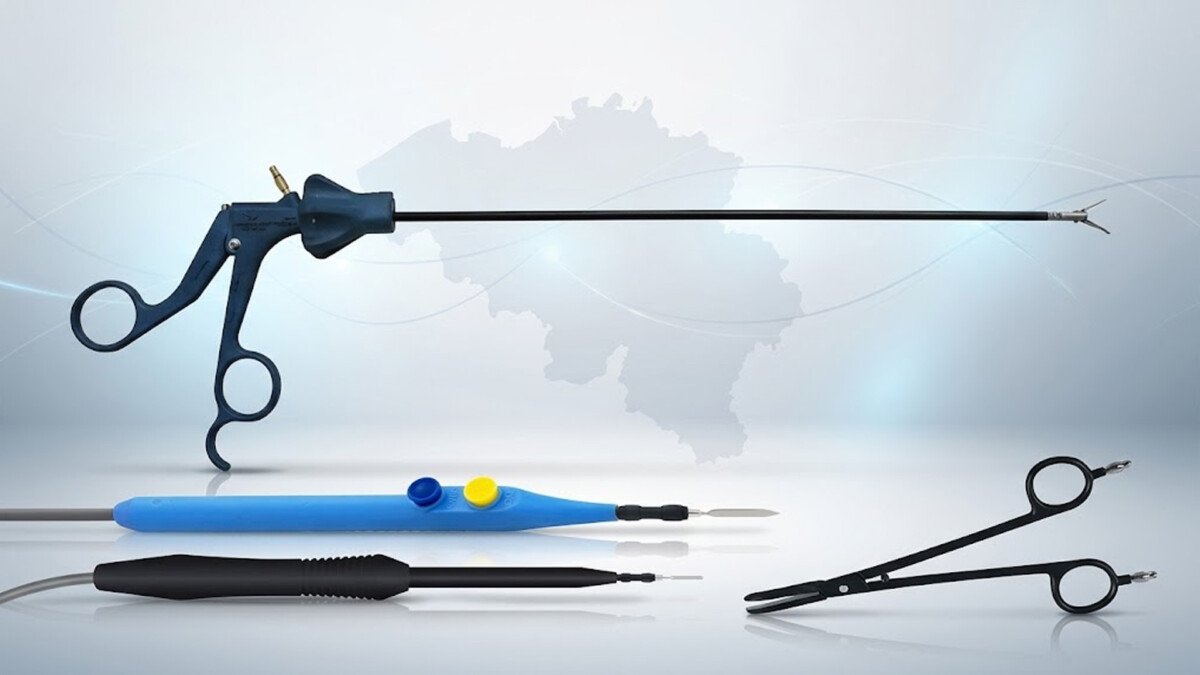
 A practical sourcing framework for product selection, documentation, compatibility and responsible market supply
Belgian hospitals and medical-device distributors need electrosurgical products that can be identified, evaluated and reordered with confidence. That requires more than a broad catalogue. Product references, connection requirements, packaging information and current regulatory documentation must support the commercial discussion from the beginning.
Buyers evaluating electrosurgical instruments in Belgium should compare the exact instrument configuration, connected HF equipment, product documentation and responsibilities associated with their role in the supply chain. Seemann Technologies publishes single-use HF and MIS product families including bipolar forceps, monopolar electrodes, bipolar forceps cables and connected accessories for professional healthcare buyers.
A complete product enquiry starts with the instrument family
Electrosurgical instruments include several distinct product types. A distributor may receive an enquiry for bipolar forceps, a hospital may need a replacement monopolar electrode, and a technical team may be trying to identify the correct cable for installed HF equipment. Each request needs its own specification.
Seemann’s single-use HF instrument range organises the main open-surgery product families into bipolar forceps, monopolar electrodes and bipolar forceps cables. Its wider portfolio also covers HF handles with cables and electrodes and instruments for minimally invasive surgery.
Verified Seemann product families for Belgian buyers
Single-use bipolar forceps
The published bipolar forceps selection includes straight, angled-tip and bayonet designs. Standard and non-stick variants are listed, together with cable-connected and irrigation configurations.
Belgian hospital and distributor enquiries should state the pattern, total length, tip specification, non-stick requirement and cable arrangement. A broad description such as “standard bipolar forceps” does not establish the correct product reference.
Monopolar and specialised electrodes
Seemann publishes single-use monopolar electrodes in short and long 2.4 mm and 4 mm shaft groups, along with arthroscopic, tungsten and conisation categories. The same product area includes bipolar electrodes with a 5 m cable for ENT.
Modality, electrode form, shaft dimensions and connection should be preserved in the buyer’s record. Forceps and electrodes are separate categories and should not be interchanged in tender or catalogue language.
Bipolar forceps cables
Seemann’s single-use bipolar forceps cables include 5 m options with more than one connector arrangement. Cable selection should confirm both the instrument-side interface and the equipment-side plug.
Single-use MIS instruments
The single-use MIS range identifies bipolar dissection and grasping forceps, bipolar scissors, monopolar instruments, laparoscopic electrodes and suction or irrigation products. These categories can support a broader distributor portfolio while retaining separate product specifications.
Product selection and connected-system checks
| Product family | Main buying information | Compatibility information |
| Bipolar forceps | Pattern, length, tip, standard or non-stick, cable inclusion | Forceps interface, cable and HF equipment model |
| Monopolar electrode | Electrode form, shaft diameter, length and product group | Handle interface, cable and equipment connection |
| ENT bipolar electrode | Exact electrode reference and cable arrangement | Equipment-side connector and HF equipment model |
| Bipolar forceps cable | Cable length and both connection ends | Exact forceps and equipment references |
| HF handle | Control arrangement, electrode interface and supply format | Cable, connector and HF equipment model |
Belgian distributor and importer roles must be identified
The applicable obligations depend on the organisation’s role for the particular device and supply route. A company acting as a distributor does not automatically have the same responsibilities as an importer. Buyers should establish the economic-operator chain for each product before commercial supply begins.
The European Commission’s official economic-operator information explains that manufacturers, authorised representatives, importers and distributors have responsibilities under the medical-device regulations. The precise requirements should be confirmed for the device and role concerned.
Current registration considerations in Belgium
The Federal Agency for Medicines and Health Products states that Belgian distributors, or distributors operating on Belgian territory, must register their distribution activity through the FAMHP web portal. Its current registration guidance also states that, from 28 May 2026, importers register in the EUDAMED Actors module rather than through the FAMHP web portal.
The same FAMHP guidance addresses notification where importers or distributors carry out certain relabelling or repackaging activities under Article 16 of Regulation (EU) 2017/745. Requirements should be confirmed for the particular organisation, device and activity. This content is general purchasing information and not legal advice.
Seemann procurement insight: A distributor review is easier when the commercial file links the manufacturer reference, product documents, economic-operator chain and Belgian customer item number in one controlled record.
What Belgian distributors should verify before supply
Article 14 of Regulation (EU) 2017/745 sets out general obligations for distributors. The European Commission’s official information highlights checks involving CE marking, the EU Declaration of Conformity, accompanying manufacturer information, importer identification where applicable and UDI assignment where applicable.
The exact verification route and sampling method should reflect the regulation, national requirements and the distributor’s procedures. Buyers should refer to the current Regulation (EU) 2017/745 text and official guidance rather than relying on a commercial article as a compliance checklist.
Documentation to request during product evaluation
Depending on the device and buyer role, a hospital or distributor may request:
- the current product specification and catalogue reference;
- label and packaging information;
- instructions for use where applicable;
- EU Declaration of Conformity and relevant certification information;
- UDI and traceability information where applicable;
- sterile status and shelf-life information for the exact reference;
- compatibility evidence for the proposed connected system; and
- economic-operator and manufacturer contact information.
Seemann’s quality overview gives company-level background. Current reference-specific documents should be requested directly and reviewed by the appropriate hospital or distributor functions.
Language, labelling and product information
Belgium has Dutch-, French- and German-speaking communities, but product-information requirements can depend on the device, intended user and applicable national rules. A distributor should confirm the required language set for the particular product rather than applying one assumption to every electrosurgical instrument.
If relabelling, translation or repackaging is contemplated, the organisation should assess its role and obligations before making changes. Manufacturer product names and references should remain controlled throughout the process.
Compatibility information belongs in the commercial file
An electrosurgical instrument may be correctly documented for the market while still being unsuitable for a particular installed HF system. Technical and regulatory checks answer different questions and both should be completed.
For compatibility enquiries, provide the HF equipment manufacturer and model, current instrument and cable references, photographs of connection points and the required product configuration. Current documentation should support the proposed combination.
Supply continuity without unsupported promises
Hospitals and distributors benefit from sharing realistic forecasts, ordering frequency and critical product dependencies. The supplier can then discuss current availability and lead times for the relevant references. No delivery commitment should be inferred from a product listing or an earlier order.
Where a product is important to repeat supply, maintain approved alternatives only where they have completed the organisation’s normal review. Keep customers informed of reference changes and verify the current regulatory and compatibility position before substitution.
Buyer checklist for Belgium-focused enquiries
- Identify the hospital, distributor, importer or other commercial role.
- State the exact product family and required configuration.
- Provide current instrument, cable and HF equipment references.
- List the product and conformity documents required.
- Confirm applicable Belgian registration and economic-operator obligations.
- Establish language and labelling requirements for the exact device.
- Request packaging, shelf-life and traceability information.
- Provide destination, sample quantity and forecast demand.
A practical procurement route for Belgian organisations
Initial product definition
The hospital or distributor records the product family, intended commercial requirement and current reference. Essential dimensions and connection information are separated from preferences that can be explored through alternatives.
Technical and documentation review
The installed HF equipment and complete connection are identified. At the same time, the appropriate team requests product, labelling, conformity and traceability information for the proposed reference.
Sample or product evaluation
Where the organisation requires a sample, it defines what must be assessed and records the exact reference received. The sample does not replace compatibility evidence or the organisation’s approval controls.
Commercial confirmation
Only after the reference is clear should the buyer finalise quantity, packaging, availability, delivery terms and repeat-order expectations. This prevents a lower price for a different configuration from appearing to be a direct comparison.
Complaint, vigilance and traceability readiness
Distributors need a route for receiving customer complaints, identifying affected products and communicating relevant information through the supply chain. Product records should preserve manufacturer reference, lot or batch information where applicable, customer destinations and the economic operators involved.
The FAMHP publishes official information on medical-device incident notification. Organisations should establish the procedures that apply to their role and device, and seek appropriate regulatory advice where needed.
How distributors can create a commercially useful portfolio
A focused electrosurgical assortment can begin with the configurations customers already request, supported by a clear route to additional variants. Bipolar forceps, electrodes and cables can be presented as connected categories while keeping their references and compatibility requirements separate.
Sales teams should be able to identify which information must be collected before a quotation is issued. Regulatory, warehouse and customer-service teams should work from the same controlled product data. This shared structure supports more dependable enquiries than a catalogue built around repeated country terms.
When a product or supply route changes
A change in manufacturer reference, packaging, importer, connector or intended market route can affect more than the purchasing description. Review the relevant technical and regulatory records before the revised product is supplied.
Distributors should also confirm how customers will be informed when an approved item changes. Where applicable, supply-interruption information received through the economic-operator chain should be handled under the organisation’s current procedures and legal obligations.
Frequently Asked Questions
Which Seemann electrosurgical instruments are relevant to Belgian buyers?
The verified range includes single-use bipolar forceps, monopolar electrodes, bipolar forceps cables, HF handles with cables and electrodes, and several single-use MIS product families.
Do Belgian medical-device distributors need to register?
Current FAMHP guidance states that Belgian distributors, or distributors operating on Belgian territory, must register their activity through the FAMHP web portal. Buyers should verify the current rules for their circumstances.
Where do Belgian medical-device importers register?
FAMHP guidance states that, from 28 May 2026, importers register in the EUDAMED Actors module. The organisation should confirm its role and current requirements.
What compatibility details should a hospital provide?
Provide the HF equipment manufacturer and model, current instrument and cable references, connector images and required product configuration.
Can one language rule be assumed for every device in Belgium?
No. Language requirements should be confirmed for the exact device, intended user and applicable Belgian rules.
Can Belgian distributors request samples and documentation?
Yes. They can request available specifications, packaging information, conformity documents, sample details and quotation terms for the references under review.
Where can buyers discuss Belgian supply requirements?
Use the Seemann Technologies contact form to provide product, compatibility, documentation and forecast information.
Discuss Your Product Requirements
Send Seemann Technologies the required product family, configuration, existing references, HF equipment details, documentation needs, Belgian economic-operator role, destination and expected quantity. The team can then focus the commercial conversation on relevant products and current information.
Discuss an electrosurgical instrument requirement for Belgium.