
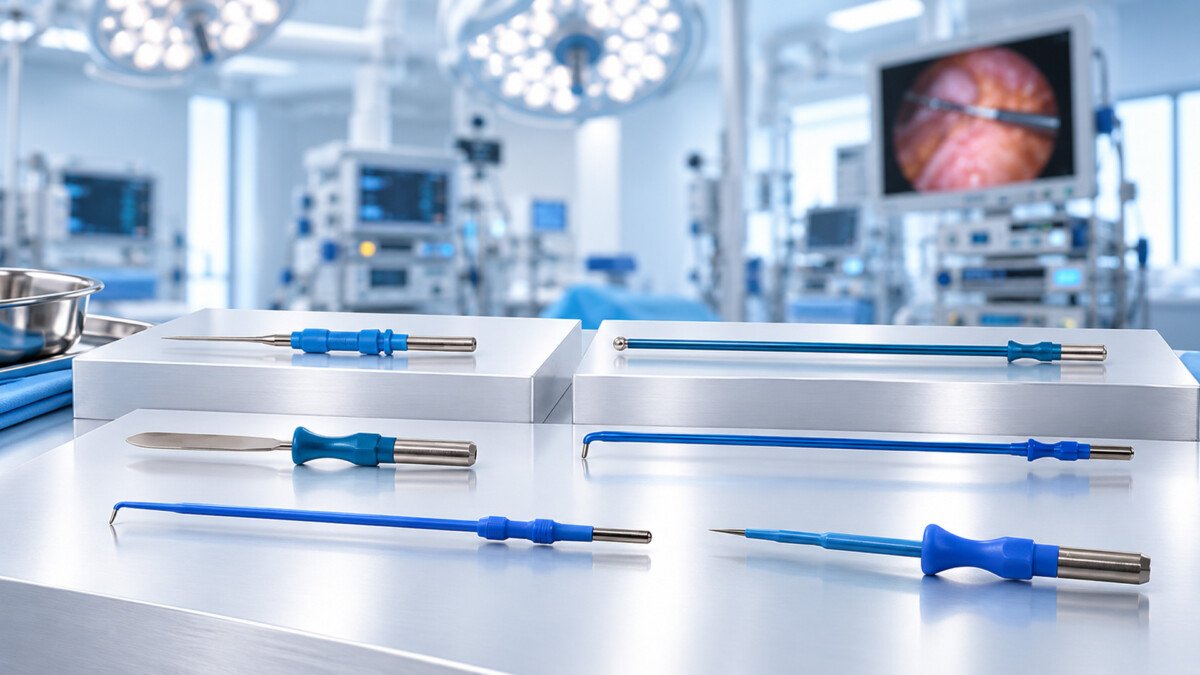
 How buyers can compare electrode shape, shaft dimensions, sterile presentation and electrosurgical compatibility
Single-use monopolar electrodes are used across open and minimally invasive HF surgery, but the working-end shape alone does not define the correct product. Professional procurement requires a complete specification covering electrode geometry, shaft diameter, working length, insulation, handpiece interface, equipment relationship and sterile product reference.
Single-use monopolar electrodes are sterile active electrodes intended for one use within a compatible monopolar electrosurgical system. Buyers should compare the working end, shaft diameter, length, insulation, handpiece interface, equipment compatibility, packaging and exact catalogue reference before approving a product.
What Is a Monopolar Electrode?
A monopolar electrode forms the active part of a monopolar HF system. From a purchasing perspective, it should be evaluated as one component of a complete configuration rather than as a standalone metal working end.
The complete relationship may involve:
active electrode → handpiece or instrument interface → cable/connector → electrosurgical equipment → applicable return pathway
This is why compatibility cannot be established by visual similarity alone.
Seemann Technologies Single-Use Monopolar Electrode Range
Seemann Technologies’ current single-use monopolar electrode range includes several sterile product families.
- short monopolar electrodes with 2.4 mm shafts;
- long monopolar electrodes with 2.4 mm shafts;
- short monopolar electrodes with 4 mm shafts;
- long monopolar electrodes with 4 mm shafts;
- single-use arthroscopic monopolar electrodes;
- single-use tungsten electrode configurations;
- single-use conisation electrodes; and
- bipolar ENT electrodes as a separate bipolar category.
These product families illustrate why a buyer should identify the shaft, length and electrical modality as well as the working-end shape.
Working-End Geometry
Monopolar electrodes can be available with different working-end designs. The required profile depends on the purchaser’s existing product specification and intended application.
Common descriptions encountered in electrosurgical sourcing can include:
- hook;
- needle;
- knife or blade;
- spatula;
- ball;
- loop; and
- specialised working-end configurations.
The same general working-end description can appear on more than one shaft configuration, so product selection should continue beyond the tip name.
Seemann procurement insight: A precise electrode enquiry starts with monopolar modality and working-end geometry, then confirms shaft diameter, length and interface. That sequence is more reliable than selecting an electrode from a photograph or generic product name.
Monopolar Electrodes for Laparoscopy
Laparoscopic electrode requirements introduce additional working-length and access considerations.
Buyers sourcing monopolar electrodes for laparoscopy should normally identify:
- working-end profile;
- shaft diameter;
- working length;
- insulated section;
- straight or angled configuration where relevant;
- handpiece or instrument interface;
- compatible HF equipment; and
- existing product reference where available.
A monopolar hook electrode, for example, should not be ordered simply from the word “hook”. Its shaft, length and interface remain part of the product specification.
Arthroscopic Monopolar Electrodes
Seemann’s catalogue also includes sterile single-use monopolar arthroscopic electrodes in 4 mm and 2.4 mm shaft families.
These products should remain clearly separated from standard active electrodes because arthroscopic requirements may involve different lengths, access constraints and working-end configurations.
A buyer replacing an existing arthroscopic electrode should provide the approved reference or technical specification where possible.
Do Not Mix Monopolar and Bipolar Electrode Categories
The Seemann electrode catalogue also presents sterile ENT bipolar electrodes with cable as a separate product family.
ENT bipolar electrodes are not monopolar electrodes. Their electrical configuration and equipment relationship differ, so the modality should remain clearly visible in:
- catalogue descriptions;
- quotations;
- sample records;
- hospital product lists; and
- repeat purchase orders.
Shaft Diameter Is a Functional Purchasing Specification
Seemann’s current monopolar range demonstrates that 2.4 mm and 4 mm shaft families can coexist within one electrode portfolio.
For buyers, that means shaft diameter should never be omitted when it affects the intended handpiece or instrument interface.
Useful comparison information includes:
| Specification | Why buyers should record it |
| Working end | Identifies the active profile requested |
| Shaft diameter | Helps establish mechanical interface requirements |
| Length | Distinguishes short, long and specialised access configurations |
| Insulation | Forms part of the exact electrode construction |
| Handpiece/interface | Helps confirm product fit |
| Equipment reference | Supports system-level compatibility review |
Sterile Packaging and Product Identification
Because these products are intended for one use, packaging is part of the commercial specification.
Professional buyers may need to review:
- sterile individual presentation;
- label information;
- catalogue reference;
- pack quantity;
- stated shelf life;
- storage conditions; and
- documentation required for purchasing review.
The sample, quotation and production order should all refer to the same product configuration.
Equipment Compatibility Should Be Checked Before Approval
Visual similarity or a matching shaft diameter does not prove compatibility.
When equipment compatibility is relevant, buyers should provide:
- electrosurgical unit manufacturer;
- model;
- handpiece reference;
- cable or connector details;
- existing electrode reference; and
- available technical documentation.
This provides a stronger basis for evaluating a replacement or alternative product.
Commercial Relevance for Belgium, Spain and Ireland
Single-use monopolar electrodes form a useful supporting category for distributors supplying HF and minimally invasive products in Belgium, Spain and Ireland.
Belgian distributors may combine monopolar electrodes with bipolar forceps and other single-use HF instruments. Spanish buyers frequently need extended-shaft products for laparoscopic portfolios, making precise information about monopolar electrodes for laparoscopy in Spain particularly useful. Irish distributors may include electrodes within broader hospital HF and laparoscopic supply programmes.
For all three markets, product selection should remain tied to the exact instrument and applicable regulatory documentation rather than a generic European catalogue description.
Regulatory and Distribution Documentation
Economic operators should confirm the obligations associated with their role in the destination market. Belgium’s FAMHP, Spain’s AEMPS and Ireland’s HPRA publish current information for medical-device distributors and importers.
Buyers should request applicable technical and conformity documentation for the specific electrode reference and complete their own assessment before commercial distribution.
Information to Send With a Monopolar Electrode Enquiry
- required working-end shape;
- shaft diameter;
- short, long or defined working length;
- insulation requirement;
- straight or angled configuration;
- handpiece or interface;
- equipment manufacturer and model;
- existing electrode reference;
- sample quantity;
- commercial quantity;
- destination country;
- packaging requirements; and
- required documentation.
Frequently Asked Questions
Which single-use monopolar electrodes does Seemann Technologies offer?
The current range includes short and long sterile monopolar electrodes with 2.4 mm and 4 mm shaft families, arthroscopic electrodes, tungsten and conisation electrode configurations.
Does Seemann supply monopolar electrodes for laparoscopy?
Yes. Seemann’s MIS and HF product structures include monopolar electrodes intended for laparoscopic product requirements.
Are ENT bipolar electrodes monopolar?
No. ENT bipolar electrodes belong to a bipolar system and should remain separate from monopolar active electrode categories.
Why does shaft diameter matter?
Shaft diameter can affect the intended handpiece or instrument interface and should therefore form part of the controlled product specification.
Can the correct electrode be selected from a photograph?
A photograph can help identify a product, but buyers should also confirm working-end geometry, shaft dimensions, insulation, interface and equipment information.
What should be included when requesting samples?
Provide the required electrode family, shaft, length, interface, equipment reference and quantity so the sample can be linked to a defined commercial product.
Request Single-Use Monopolar Electrode Information
Hospitals and medical distributors in Belgium, Spain and Ireland can review Seemann Technologies’ single-use monopolar electrodes and wider single-use HF instrument range. For product references, samples, technical information or quotations, contact Seemann Technologies with the required electrode and equipment details.