
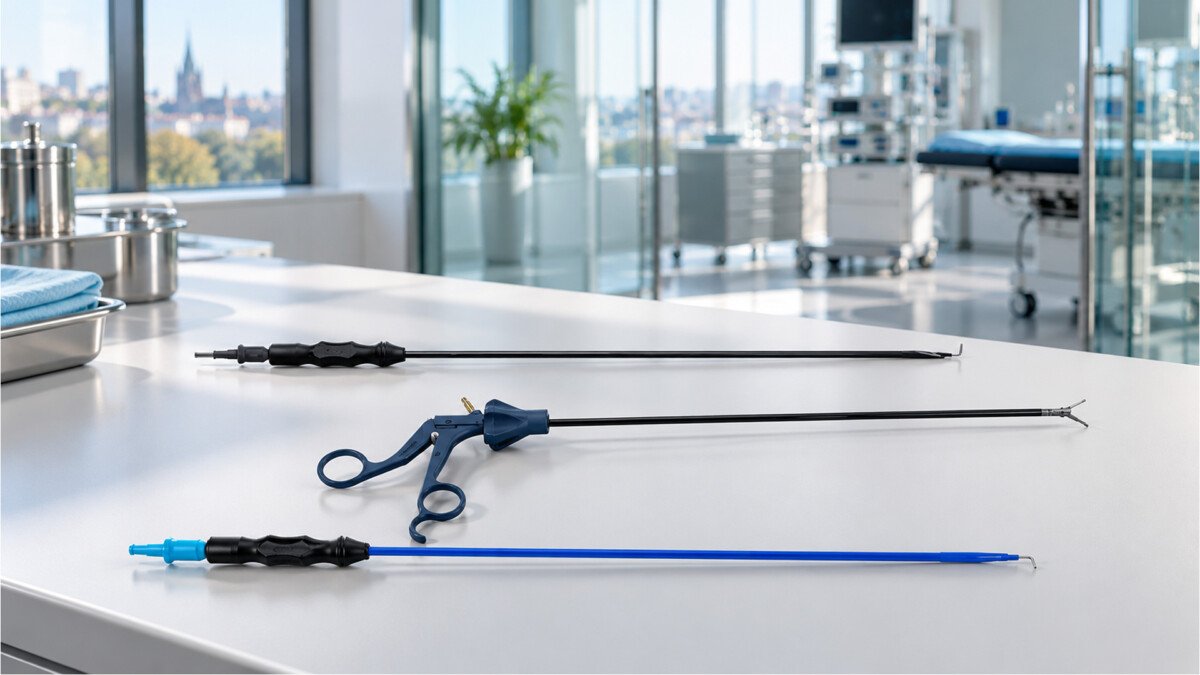
 🔬 A laparoscopic product list becomes much easier to source when buyers separate access, tissue handling, electrosurgery and fluid-management requirements before requesting quotations.
A professional Laparoscopic Instrument Procurement Guide should do more than list common minimally invasive instruments. It should help purchasing teams understand what must be specified so that products can be evaluated accurately.
In minimally invasive surgery, differences in shaft diameter, working length, distal configuration, electrosurgical connection and accessory setup can materially affect product selection.
Seemann Technologies provides a dedicated portfolio of Single-Use MIS Instruments for laparoscopic and minimally invasive surgical supply, including bipolar and monopolar grasping/dissection instruments, scissors, monopolar electrodes and suction/irrigation products.
Start With the Procedure’s Required Product Families
The easiest way to organise laparoscopic procurement is by function.
A complete product review may involve:
- Grasping and dissection
- Cutting
- Electrosurgical energy delivery
- Suction and irrigation
- Access instruments
- Specimen management
Not every procedure requires every category, but using a functional structure prevents unrelated products from being mixed together in the same specification.
Bipolar Dissection and Grasping Forceps
Seemann Technologies currently lists bipolar dissection and grasping forceps within its single-use MIS range.
For procurement teams, useful specification fields may include:
- Distal jaw configuration
- Shaft diameter
- Working length
- Handle configuration
- Electrosurgical connection
- Current product reference
A quotation should identify the exact product being offered rather than presenting every bipolar grasping instrument as equivalent.
Monopolar Dissection and Grasping Instruments
Monopolar grasping and dissection products form a separate electrosurgical category.
Where these instruments are required, buyers should specify both the mechanical function and monopolar connection.
This may include:
- Jaw or distal configuration
- Shaft diameter
- Working length
- HF connection
- Existing approved reference
Bipolar and Monopolar Scissors
Seemann Technologies also identifies bipolar and monopolar scissors within its current MIS product portfolio.
The terms should remain distinct during procurement because the electrosurgical configuration is part of the product specification.
A buyer should not approve a product simply because the mechanical cutting profile appears similar.
Laparoscopic Electrodes
Laparoscopic Electrodes are another important MIS category.
For product identification, buyers should consider:
- Electrode tip geometry
- Shaft diameter
- Working length
- HF connection
- Current product reference
Seemann Technologies currently includes monopolar electrodes for laparoscopy within its dedicated MIS portfolio.
The product should be evaluated against the approved specification rather than selected from keyword similarity alone.
Suction and Irrigation Instruments
Suction Irrigation Instruments support fluid management during minimally invasive procedures and represent a separate purchasing category.
Depending on the exact product, procurement teams may need to identify:
- Shaft diameter
- Working length
- Valve configuration
- Tubing or connector arrangement
- Current reference
Any exact specification used in website content should be based on the current Seemann catalogue or product documentation.
Working Length Is Critical in Laparoscopic Procurement
One of the most important distinctions between laparoscopic instruments is working length.
A distributor should not use general descriptions such as “long instrument” when an exact measurement is available.
Each quotation should retain the manufacturer’s measurement terminology so that hospital teams can compare references accurately.
Shaft Diameter Should Be a Dedicated Specification Field
Shaft diameter can influence which access system and instrument configuration is being reviewed.
For this reason, it should appear separately in the procurement specification.
A strong product enquiry might state:
“Single-use laparoscopic instrument, required working length, specified shaft diameter and documented distal configuration.”
This gives the supplier a much clearer starting point.
Do Not Ignore the Electrosurgical Connection
Where a laparoscopic instrument uses monopolar or bipolar HF technology, the electrical connection becomes part of the product selection process.
Buyers should identify:
- Instrument-side connection
- Cable requirement where applicable
- HF generator or equipment information
- Existing approved cable/reference
This is especially important when hospitals use more than one electrosurgical equipment platform.
Single-Use vs Reusable Laparoscopic Instruments
Single-use and reusable instruments represent different procurement models.
For a Single-Use MIS Instrument, the buyer may also need reference-specific information about:
- Sterile presentation
- Packaging
- Shelf life
- Storage
- Ordering unit
- Product documentation
These characteristics should be confirmed for the exact reference rather than assumed across the entire category.
Laparoscopic Procurement Checklist
| Requirement | What to Confirm |
| Product function | Grasping, dissection, cutting, electrode or suction/irrigation |
| Current reference | Existing approved product where available |
| Shaft diameter | Exact required specification |
| Working length | Exact documented measurement |
| Distal configuration | Jaw, scissor, electrode tip or relevant working end |
| Energy configuration | Monopolar, bipolar or non-energy instrument |
| Connection | Cable/equipment requirement where applicable |
| Usage model | Single-use or reusable |
| Documentation | Technical and quality information required for evaluation |
How Distributors Can Structure a Laparoscopic Catalogue
A medical distributor can make product review easier by organising laparoscopic instruments according to function rather than presenting one long list.
A useful catalogue structure may be:
- Access instruments
- Dissection and grasping instruments
- Scissors
- Electrodes
- Suction and irrigation
- Specimen retrieval
Each category should then display reference-level specifications.
Documentation and Supplier Evaluation
Product availability alone is not enough for professional medical procurement.
Buyers may also require:
- Technical product information
- Instructions for use
- Packaging information
- Current quality documentation
- Applicable conformity information
The exact documents needed depend on the buyer and market.
A distributor should request the current documentation associated with the exact product rather than relying on information copied from another reference.
Related Seemann Technologies Product Areas
- Single-Use MIS Instruments
- Monopolar Electrodes
- Electrosurgical Instruments
- Single-Use HF Instruments
Frequently Asked Questions About Laparoscopic Instrument Procurement
What are the most important specifications for laparoscopic instruments?
Important fields often include product function, shaft diameter, working length, distal configuration and electrosurgical connection where applicable.
Does Seemann Technologies provide single-use MIS instruments?
Yes. The current product portfolio includes bipolar and monopolar grasping/dissection instruments, scissors, laparoscopic electrodes and suction/irrigation instruments.
Why should distributors provide an existing reference?
An existing reference gives the manufacturer a clearer technical basis for understanding dimensions, configuration and connection requirements.
Should price be compared before specifications?
No. Commercial comparison is more meaningful once the products being compared meet the same documented requirement.
Request Laparoscopic Instrument Information
Seemann Technologies supports professional healthcare buyers and distributors with Laparoscopic Instruments and Single-Use MIS Instruments across several product families.
Provide your current reference, required shaft diameter, working length and instrument configuration to begin a focused product discussion.