
 A structured way to evaluate the complete connection before instruments or accessories are ordered
Electrosurgical products work as a connected system. The installed generator or HF unit, equipment-side socket, cable, instrument interface and selected forceps or electrode must all form a documented combination. Compatibility cannot be established from one familiar-looking plug, a broad brand name or a generic request for an electrosurgical accessory.
Electrosurgery equipment compatibility should be checked across the complete connection path: HF equipment model, socket, cable, instrument interface and exact forceps or electrode reference. Seemann Technologies supplies verified HF and MIS instruments and connected accessories; the available evidence reviewed does not establish Seemann as a manufacturer of electrosurgical generators.
Separate the energy source from the connected products
The generator or HF unit is the energy source. Forceps, electrodes, handles and cables are connected products selected for use with compatible equipment. Keeping those roles separate prevents an accessory supplier from being incorrectly described as a generator manufacturer and helps buyers ask the right technical questions.
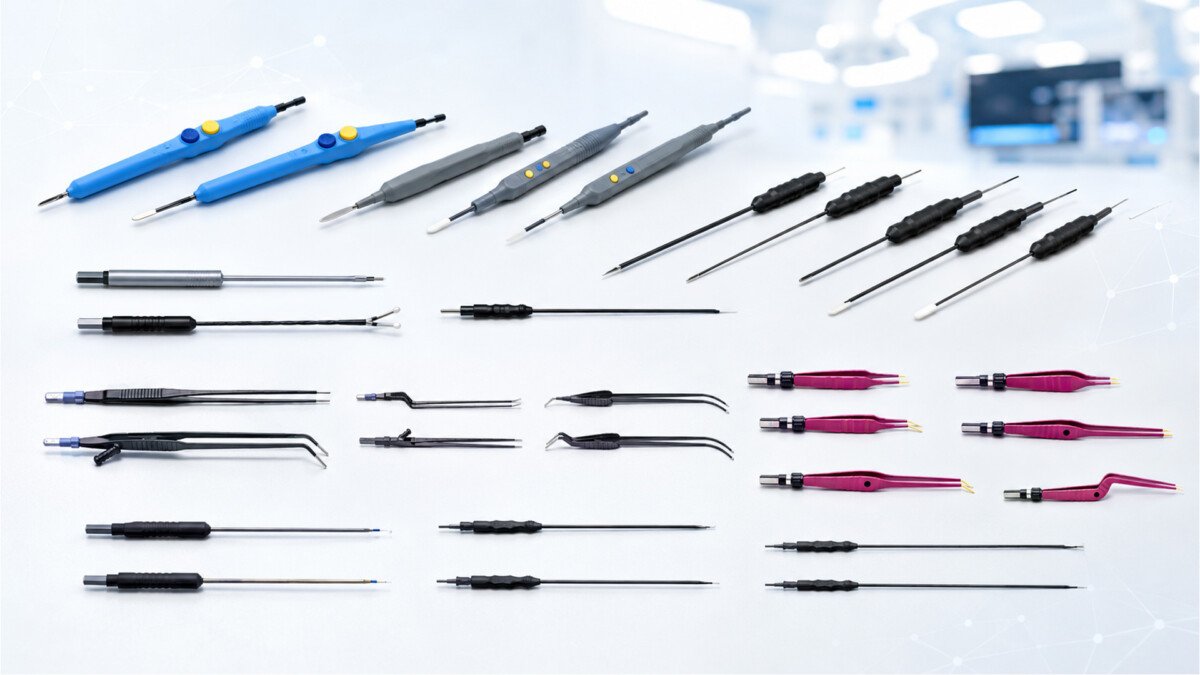
Seemann’s verified single-use HF instrument categories include bipolar forceps, monopolar electrodes and bipolar forceps cables. Its technology information also identifies HF handles with cables and electrodes. These are relevant to an equipment compatibility review, but the generator remains a separate product made by its respective manufacturer.
The five-point compatibility chain
- HF equipment manufacturer and model
Begin with the full model reference, not only the brand. Manufacturers may offer several equipment generations with different connection layouts. Record the socket used for the proposed product and consult current equipment documentation.
- Equipment-side connector
Plug geometry, pin arrangement and orientation all matter. Connector family names are helpful, but they do not replace an exact cable reference or documented equipment match. A clear photograph can support identification when markings are incomplete.
- Cable
The cable must connect the selected equipment interface to the intended instrument. Seemann publishes single-use bipolar forceps cables in 5 m configurations with more than one connector arrangement. Its broader bipolar cable technology guide describes further equipment-side connector families.
- Instrument-side interface
The connection at the forceps, electrode or handle is as important as the plug at the generator. A cable that fits the equipment but not the selected instrument does not solve the requirement. Both ends should be recorded in the product and compatibility data.
- Exact instrument reference
Finally, confirm the specific bipolar forceps, monopolar electrode or connected product. Product family, modality, pattern, dimensions and cable arrangement all contribute to correct identification.
Compatibility information by product family
| Product | Information to capture | Common source of ambiguity |
| Bipolar forceps | Pattern, length, tip, cable inclusion and instrument interface | Assuming all forceps use the same cable |
| Bipolar forceps cable | Length, instrument-side connection and equipment-side connector | Checking only the plug at one end |
| Monopolar electrode | Electrode form, shaft, length and handle interface | Choosing from tip shape alone |
| HF handle | Control arrangement, electrode interface, cable and connector | Using “cautery pencil” as a full specification |
| ENT bipolar electrode | Exact electrode, supplied cable and equipment-side connection | Misclassifying it as a monopolar product |
Why a connector photograph is useful—but not sufficient
Photographs can help a supplier recognise a connector family, read a product marking or understand the current setup. They are especially useful when the buyer does not have an item number. However, photographs do not establish electrical or regulatory compatibility.
The image should be paired with the equipment model, existing cable reference, instrument reference and current documentation. Final confirmation should rely on manufacturer information for the exact proposed combination.
Seemann procurement insight: Send compatibility evidence as a set: equipment model, socket image, cable reference, both connector images and instrument reference. A complete set is far more useful than separate messages sent over several days.
Do not treat a substitution as a name match
A hospital may ask whether one cable or instrument can replace another. Matching the generic name is only the first step. The proposed reference should be compared across configuration, dimensions, connection, intended-use information and any other attributes required by the organisation’s approval process.
Distributors should avoid presenting a visually similar product as equivalent without documentary support. Where a formal equivalence or compatibility statement is needed, the request should be made explicitly and assessed against available manufacturer evidence.
Single-use supply and compatibility records
Single-use instruments and cables still need durable technical records. Product names, catalogue references, compatible connections and equipment information should remain accessible to procurement, customer service and sales teams. This prevents repeat orders from depending on one person’s memory.
The Seemann product overview separates open-surgery single-use HF instruments, minimally invasive HF instruments and reusable HF categories. That structure can guide portfolio records while leaving compatibility to the exact reference level.
Buyer checklist for a compatibility request
- Record the HF equipment manufacturer, model and relevant socket.
- Identify the current cable and instrument references.
- Photograph both connection ends and any readable markings.
- State whether the requirement is bipolar or monopolar.
- Describe the required forceps, electrode or handle configuration.
- Confirm the preferred cable length and connector orientation.
- List the documentation needed to approve the proposed combination.
- Include destination market, quantity and sample requirements.
Documentation to support a purchasing decision
Professional buyers may request product specifications, label information, instructions for use where applicable, packaging details and relevant conformity documentation. The exact set depends on the product and the buyer’s role. Seemann’s quality information offers supplier context, while compatibility evidence should relate to the actual references under review.
Lead time, stock status, minimum quantities and commercial arrangements also need direct confirmation. Technical compatibility does not automatically establish availability or suitable commercial terms.
Managing compatibility across more than one HF equipment model
A hospital group or distributor may support several equipment models at the same time. In that situation, a single compatibility statement is rarely adequate. Build a matrix that lists each HF equipment model, the relevant socket, approved cable reference and connected instrument references. Record the source and date of the supporting information.
Where two models use different connectors, avoid hiding the difference under one stock description. Separate item records or clear variant fields help purchasing and warehouse teams issue the intended cable. If one cable is documented for more than one model, retain the evidence rather than shortening the record to “universal”.
Three checks before a sample or first order
Technical identification
Confirm that the model numbers, connector descriptions and product references are complete. Resolve any mismatch between the current equipment label, procurement record and user description.
Document review
Collect the current specifications and compatibility information required by the organisation. A supplier email may help explain the proposal, but formal evidence requirements should be satisfied through the appropriate documents.
Commercial confirmation
Verify the exact items included in the quotation, especially when a forceps is available with or without a cable. Confirm quantity, packaging, availability, delivery terms and any sample conditions. Technical suitability and commercial completeness are separate checks.
Maintain compatibility data as equipment changes
Installed equipment, product references and supplier catalogues can change. Hospitals and distributors should review compatibility records when a generator is replaced, a cable reference changes or an approved instrument is updated. Date-stamped records make it easier to identify information that may need reconfirmation.
For repeat orders, send the approved product reference rather than rebuilding the requirement from a generic description. If anything in the connected system has changed, reopen the compatibility review before purchasing.
A short review date in the item record gives procurement teams a practical trigger for reconfirmation. It also helps distributors distinguish current compatibility information from notes inherited from an older equipment installation, particularly when several hospitals share a central purchasing system.
Frequently Asked Questions
What does electrosurgery equipment compatibility include?
It includes the HF equipment model, socket, cable, connectors, instrument interface and exact forceps, electrode or handle reference.
Does Seemann Technologies manufacture electrosurgical generators?
The verified public product information reviewed for this guide supports HF and MIS instruments and connected accessories, not generator manufacture.
Can a bipolar cable be selected by plug shape?
No. Buyers should verify both ends of the cable, cable length, exact equipment model and intended instrument using current documentation.
Are all Seemann forceps compatible with every Seemann cable?
Compatibility should not be assumed across a product family. Confirm the exact forceps, cable and equipment references.
What should a distributor request from a customer?
Ask for the equipment model, current cable and instrument references, connector photographs, required configuration and any approval documents the customer needs.
Can Seemann help with a replacement-product enquiry?
Buyers can submit the current reference and essential specification for review. Any proposed alternative should then follow the buyer’s normal technical and clinical approval process.
Where should compatibility enquiries be sent?
Hospitals and distributors can send the complete requirement through the Seemann Technologies contact form.
Discuss Your Product Requirements
Provide the HF equipment model, current instrument and cable references, clear connector images, required product configuration, destination market and expected quantity. Seemann Technologies can then focus the discussion on relevant product information and documented connection options.
Discuss electrosurgical instrument, cable and equipment compatibility.