
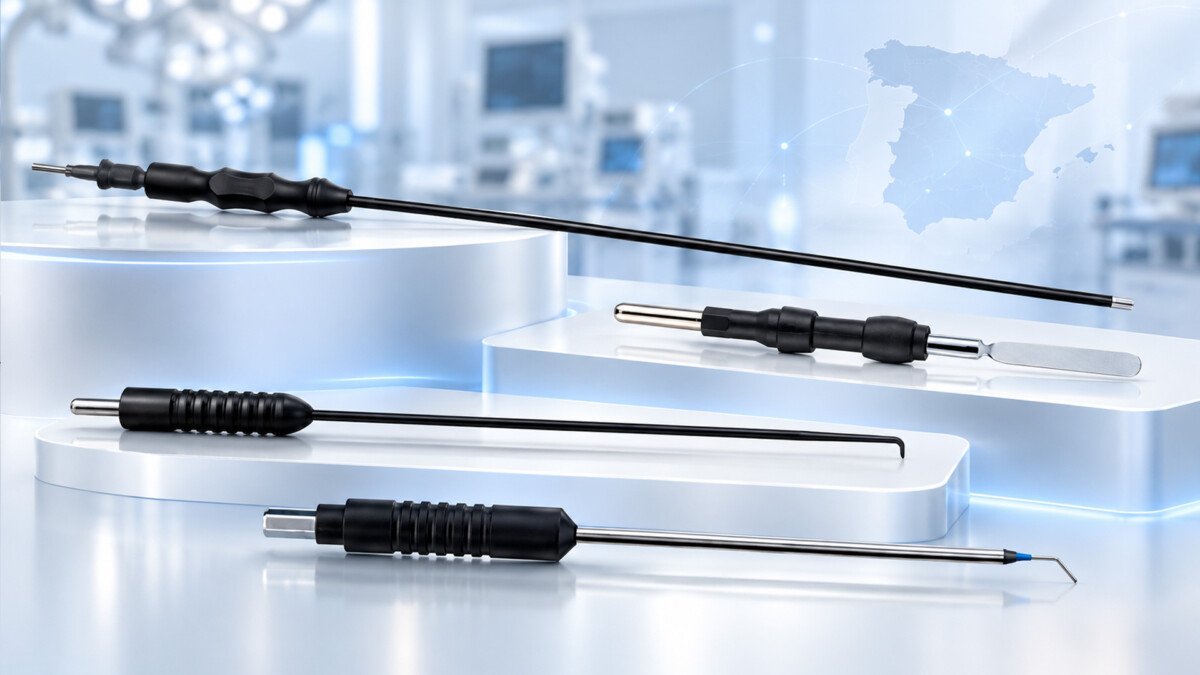
 Compare electrode modality, form, shaft and connection before requesting a Spanish quotation
“Diathermy electrode” can refer to several electrosurgical product types, and the differences matter. A buyer may need a monopolar active electrode for open surgery, an arthroscopic configuration, a bipolar ENT electrode with cable or a longer laparoscopic electrode. A clear request separates these categories before dimensions and connections are compared.
Buyers sourcing a diathermy electrode in Spain should first identify whether the requirement is monopolar or bipolar and whether it concerns open, arthroscopic, ENT or laparoscopic use. The final specification should state the electrode form, shaft diameter and length, cable arrangement, equipment connection, packaging and required documentation for the exact product reference.
Use the exact electrode category
Diathermy is a widely understood commercial term, while Seemann’s public catalogue uses more specific product names such as monopolar electrodes, arthroscopic electrodes, bipolar electrodes for ENT and monopolar electrodes for laparoscopy. Keeping those names distinct improves quotations, catalogue records and compatibility discussions.
The published electrode selection includes short and long single-use monopolar electrodes with 2.4 mm and 4 mm shafts, arthroscopic electrodes in both shaft diameters, a 4 mm insulated tungsten electrode, conisation electrodes and single-use bipolar electrodes with a 5 m cable for ENT.
Forceps and electrodes are separate instrument families. A monopolar electrode must not be renamed “monopolar forceps” to match a search phrase or an informal purchasing description.
Open-surgery monopolar electrodes
Seemann lists short and long monopolar electrodes with 2.4 mm and 4 mm shafts. These published dimensions give Spanish buyers a useful first division, but shaft diameter alone is not a complete reference. The electrode form, length, handle connection and compatible equipment arrangement also need to be identified.
Where an existing hospital item is being replaced, send the current manufacturer reference and a complete product description. This is more reliable than requesting “the same size”, particularly when total length, working length and shaft dimensions are stored differently between catalogues.
Arthroscopic electrodes
The verified Seemann range includes single-use monopolar arthroscopic electrodes with 2.4 mm and 4 mm shafts. The term “arthroscopic electrode” identifies the product family, not a universal design. Buyers should request the current reference-level details for electrode form, dimensions, connection and intended use.
Arthroscopic requirements should remain separate from laparoscopic ones. Both may involve a shafted instrument, but a similar visual profile does not make them interchangeable. Procurement descriptions should follow the manufacturer’s current device information.
ENT bipolar electrodes
Seemann publishes single-use bipolar electrodes with a 5 m cable for ENT. The live product selection identifies connector options including 2-pin international, ERBE ICC/ACC and Martin configurations. The buyer should select the exact product reference and confirm the connected HF equipment model; a connector name alone does not prove system compatibility.
“ENT Bipolar Electrode” is the correct product wording. It should be distinguished from a monopolar active electrode and from bipolar forceps. Spanish catalogue records should retain the modality, specialist category, cable length and connector as separate attributes.
Laparoscopic electrodes
Seemann’s single-use MIS portfolio includes monopolar electrodes for laparoscopy. Laparoscopic sourcing introduces additional shaft and access considerations, so the buyer should confirm the current working length, diameter, distal form and proximal connection for the required reference.
Do not extend specifications from an open-surgery electrode to a laparoscopic product. The clinical stakeholder defines the required product characteristics, while procurement and technical teams preserve those characteristics through equipment and commercial review.
Electrode categories compared
| Electrode category | Verified Seemann context | Key purchasing fields |
| Open monopolar electrode | Short and long 2.4 mm and 4 mm shaft options | Form, shaft, length, handle connection and HF equipment |
| Arthroscopic electrode | Single-use monopolar 2.4 mm and 4 mm shaft options | Reference, form, dimensions, connection and documentation |
| ENT bipolar electrode | Single-use configuration with 5 m cable | Electrode reference, connector and HF equipment model |
| Laparoscopic electrode | Monopolar electrodes within the MIS portfolio | Working length, profile, distal form and proximal connection |
| Conisation or tungsten electrode | Specialised options in the published monopolar category | Exact reference, dimensions, intended product specification and connection |
Shaft diameter is only one part of selection
An electrode shaft description should make clear whether the figure refers to diameter and whether a stated length is total or working length. Mixing these fields can result in two products appearing equivalent when they are not.
A useful product record separates:
- electrosurgical modality: monopolar or bipolar;
- product family: open, arthroscopic, ENT or laparoscopic;
- electrode or distal form;
- shaft diameter;
- working and total length where applicable;
- handle, cable and connector arrangement;
- HF equipment manufacturer and model; and
- manufacturer reference and packaging data.
Seemann procurement insight: Preserve modality, product family, shaft and connection as separate fields; a short description such as “4 mm electrode” is not enough to identify a safe, repeatable purchasing reference.
Handle, cable and equipment compatibility
An active electrode may connect through an HF handle and cable, while a bipolar ENT electrode may be supplied in a defined cable-connected configuration. Buyers should map the complete route from electrode to HF equipment and use the current documentation for every connected component.
Seemann lists HF handles with cables and electrodes within its single-use HF product range. When a Spanish hospital uses “cautery pencil” in its request, the distributor should translate that into the exact handle, electrode, cable and control requirement without relabelling the manufacturer’s product.
Provide the HF equipment model and socket reference for compatibility enquiries. Photographs are useful supporting evidence, but connection shape alone is not sufficient.
Single-use status, sterility and packaging
The verified electrode category identifies these products as single-use and sterile. Even so, a buyer should obtain the current packaging, labelling, shelf-life and storage information for the exact shortlisted reference. Product-family descriptions should not replace reference-level data.
Spanish distributors should also record the unit of sale and packaging hierarchy correctly. This supports warehouse setup, hospital item creation, stock rotation and repeat supply. Any availability or lead-time information should be confirmed at quotation stage.
Documentation for Spanish buyers
Depending on the device, classification and economic-operator role, the requested documentation may include the specification, approved label, packaging information, instructions for use, EU Declaration of Conformity, relevant certificate information and UDI details where applicable.
AEMPS explains in its medical-device requirements that products must carry the information necessary to identify the device and manufacturer and to support safe use. The exact labelling, instructions and language requirements should be confirmed for the particular electrode and intended user.
Seemann’s quality information provides manufacturer context. The commercial review still needs the current documents for the exact electrode reference.
RECOPS and the Spanish supply route
AEMPS describes RECOPS as its application for communication by economic operators marketing relevant non-custom-made medical devices and in-vitro diagnostic devices in Spain. A distributor or importer should establish its regulatory role and check which product and activity communications apply.
Requirements can vary with the device and operator. Registration, labelling, traceability, storage, transport, complaints and vigilance should be reviewed against current official guidance. This content supports procurement planning and does not provide legal advice.
Maintain accurate terminology in Spanish catalogue records
A distributor may need Spanish descriptions for customers, tenders or internal systems. Translation should begin from the approved product name and specification, not from a broad English search term. Monopolar, bipolar, arthroscopic, ENT and laparoscopic distinctions must remain intact.
Keep the original Seemann reference alongside the local description and control any revision to the label, instructions or sales record. When a familiar Spanish term covers more than one electrode family, add the modality, shaft and connection fields instead of relying on the translated name alone. Professional review is particularly important where wording could imply a different intended use.
Samples should answer a defined purchasing question
Before requesting a sample, decide what must be evaluated: electrode dimensions, connection, packaging, documentation or fit against an existing specification. Request the exact reference, not only the product family.
The sample record should include the receiving organisation, quantity, lot details where applicable, associated HF equipment and evaluation outcome. If the reference or connector changes, the relevant review should be repeated.
Buyer checklist for a diathermy electrode enquiry
- State monopolar or bipolar modality.
- Identify open, arthroscopic, ENT or laparoscopic category.
- Provide the current reference or required electrode form.
- Record shaft diameter and relevant lengths.
- Describe the handle, cable and connector arrangement.
- Provide the HF equipment manufacturer and full model.
- List sterile, packaging, documentation and language needs.
- Include sample quantity, forecast demand and Spanish destination.
Comparing supplier offers
A fair comparison begins after each proposed reference has been matched to the mandatory technical fields. An electrode with a different shaft, connector or product family is not a direct alternative simply because it shares the term “diathermy”.
Once technical suitability has been assessed, compare documentation completeness, packaging, unit of sale, sample terms, current lead time and commercial conditions. Ask suppliers to identify any deviation rather than leaving procurement to infer differences from product names.
Frequently Asked Questions
What does “diathermy electrode” mean in procurement?
It is a broad buying term for an electrosurgical electrode. A useful specification should identify the modality, product family, dimensions and connection.
Which monopolar electrode shaft diameters does Seemann publish?
The live single-use HF category includes short, long and arthroscopic monopolar electrodes with 2.4 mm and 4 mm shafts.
Does Seemann publish an ENT Bipolar Electrode?
Yes. The verified selection includes single-use bipolar electrodes with a 5 m cable for ENT, with specific connector variants shown in the product category.
Are arthroscopic and laparoscopic electrodes interchangeable?
No interchangeability should be assumed. They are separate product categories and must be assessed by exact reference, dimensions, connection and intended product documentation.
What should be supplied for an electrode compatibility enquiry?
Provide the current electrode, handle and cable references, the HF equipment manufacturer and model, connector details and the required electrode specification.
Do Spanish operators need to consider RECOPS?
Relevant economic operators should check current AEMPS RECOPS requirements according to their role and the products marketed in Spain.
Can a distributor request electrode samples?
Sample availability should be confirmed directly. Include the exact reference, evaluation purpose, quantity, associated equipment and delivery destination.
Discuss Your Product Requirements
Send Seemann Technologies the required electrode category, modality, form, shaft dimensions, handle or cable arrangement, HF equipment model, documentation needs, sample quantity and forecast demand. Complete information supports a more relevant product and quotation discussion.
Request diathermy electrode information or discuss distributor supply for Spain.