
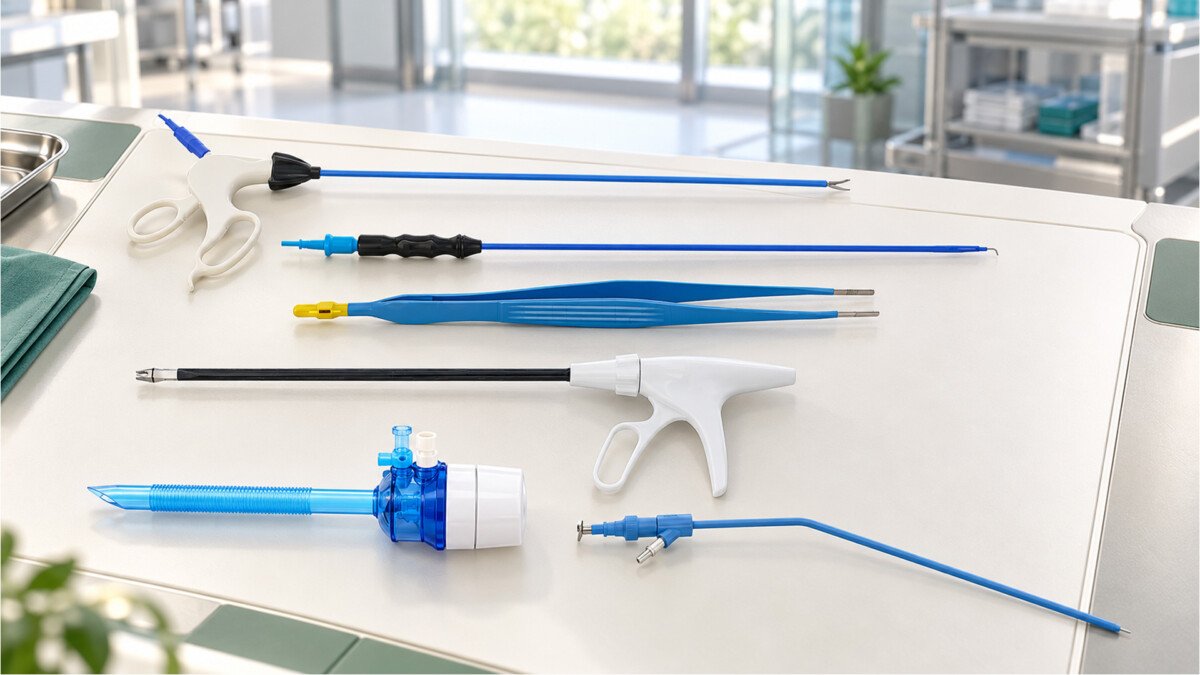
 📋 A useful instrument set is not simply a box of related products. It begins with the procedure workflow and maps each required function to a clearly specified instrument reference.
A Single-Use Surgical Instrument Set can help hospitals, surgical centres and medical distributors organise procedure-related products in a more structured way. The objective is not necessarily to create one universal pack for every procedure, but to identify which single-use instrument categories are repeatedly required and how those products should be specified.
Seemann Technologies states that it can provide an appropriate single-use instrument set for many standardised procedures and maintains a broader portfolio across HF surgery and minimally invasive surgery.
For procurement teams, this creates an opportunity to move from isolated product purchasing toward more structured procedure-based planning.
Start With the Procedure Workflow
A Single-Use Instrument Set should be built around the functional requirements of the procedure rather than around a random collection of catalogue products.
The planning process may involve categories such as:
- access;
- grasping and dissection;
- electrosurgical energy;
- cutting;
- suction and irrigation;
- specimen handling;
- other procedure-specific support products.
Not every procedure needs every category.
The hospital’s approved clinical and procurement requirements should determine the final product list.
Separate HF and MIS Product Functions
Seemann Technologies provides both Single-Use HF Instruments and Single-Use MIS Instruments.
A procedure-based set may therefore include products from both areas.
For example:
- Bipolar forceps or bipolar laparoscopic instruments
- Monopolar electrodes
- HF cables or handles
- Laparoscopic grasping instruments
- Scissors
- Suction/irrigation products
- Access instruments
The relationship between these products should be documented clearly before the commercial set is built.
Access Products
Minimally invasive procedure planning may begin with access-related categories such as:
- Veress Needles
- Laparoscopic Trocars
Each reference should retain its exact diameter, length and configuration rather than being grouped under one generic access description.
Grasping and Dissection Products
The Seemann MIS range includes bipolar and monopolar dissection/grasping instruments.
A set-planning document should identify:
- energy configuration;
- jaw pattern;
- shaft diameter;
- working length;
This prevents similar-looking forceps from being treated as identical items.
Electrode and Energy Requirements
Electrosurgical products may include:
- monopolar electrodes;
- laparoscopic hook electrodes;
- bipolar forceps;
- HF handles;
- bipolar cables.
Where these products connect electrically, the instrument set should also account for the required cable or HF equipment interface.
Scissors and Cutting Instruments
The current Seemann MIS portfolio includes both bipolar and monopolar scissors.
When one of these products is included in a standardised instrument list, the product reference should identify:
- scissor type;
- blade profile;
- shaft diameter;
- working length;
- energy connection.
Suction and Irrigation
Fluid-management products may form another part of a laparoscopic set.
Seemann currently publishes a single-use suction/irrigation example with a 5 mm diameter, 330 mm working length and two trumpet valves on its homepage.
Where such a product is required in a procedure list, those specifications should be tied to the exact approved reference.
Do Not Confuse an Instrument List With a Pre-Packed Procedure Kit
This distinction is important.
A hospital or distributor may create a standardised Procedure Instrument Set as a purchasing list without the products necessarily being physically packaged together as one sterile procedure pack.
Unless Seemann Technologies confirms that a particular combination is supplied as one pre-packed commercial kit, website content should describe it as an instrument-set or procedure-planning concept rather than claim that all products arrive in one package.
Reference-Level Standardisation
Once the procedure’s requirements have been established, each line should be tied to an exact product reference.
A useful internal procurement sheet may contain:
| Procedure Function | Product Category | Specification Fields |
| Access | Trocar / Veress needle | Diameter, length, reference |
| Grasping | Bipolar/monopolar forceps | Jaw, shaft, working length |
| Energy | Electrode / bipolar instrument | Tip, connection, cable |
| Cutting | Laparoscopic scissors | Blade, diameter, working length |
| Fluid management | Suction/irrigation | Diameter, length, valve configuration |
How Distributors Can Use Standardised Instrument Lists
For medical device distributors, a standardised procedure list can make repeat quotations easier.
Instead of rebuilding the quotation from the beginning each time, the distributor can maintain an approved product matrix containing:
- hospital/customer;
- procedure;
- required product category;
- approved reference;
- quantity;
- substitution restrictions;
- documentation status.
This can improve consistency across repeat enquiries.
Single-Use Product Planning and Stock Control
Procedure-based purchasing can also support stock planning.
Where the hospital uses stable standardised lists, the distributor can better understand which references are likely to be required together.
However, ordering quantities should still be based on actual customer demand rather than an assumed procedure volume.
Documentation Should Be Attached to References
Every product in the set should retain its own applicable technical and quality documentation.
The existence of an instrument set should not replace product-level traceability.
This is especially important for regulated medical products where each reference may have its own:
- instructions for use;
- labelling;
- technical specification;
- packaging information.
Frequently Asked Questions About Single-Use Instrument Sets
Does Seemann Technologies support procedure-based instrument sets?
Seemann’s current website states that the company offers appropriate single-use instrument sets for many standardised procedures.
Does that mean every set is supplied as one sterile pack?
Not necessarily. The exact commercial packaging of any product combination should be confirmed directly with Seemann Technologies.
Which product categories can be considered?
The current portfolio includes HF instruments, bipolar and monopolar MIS instruments, electrodes, suction/irrigation systems, trocars and Veress needles.
Why should references remain individual?
Individual references preserve specification clarity, documentation and purchasing traceability even when several products are planned together.
Discuss Single-Use Instrument Set Requirements
Seemann Technologies supports professional buyers planning Single-Use Surgical Instrument Sets and procedure-related product requirements across HF and minimally invasive surgery.
Send the procedure-related product list or current instrument references to begin a structured product discussion.