
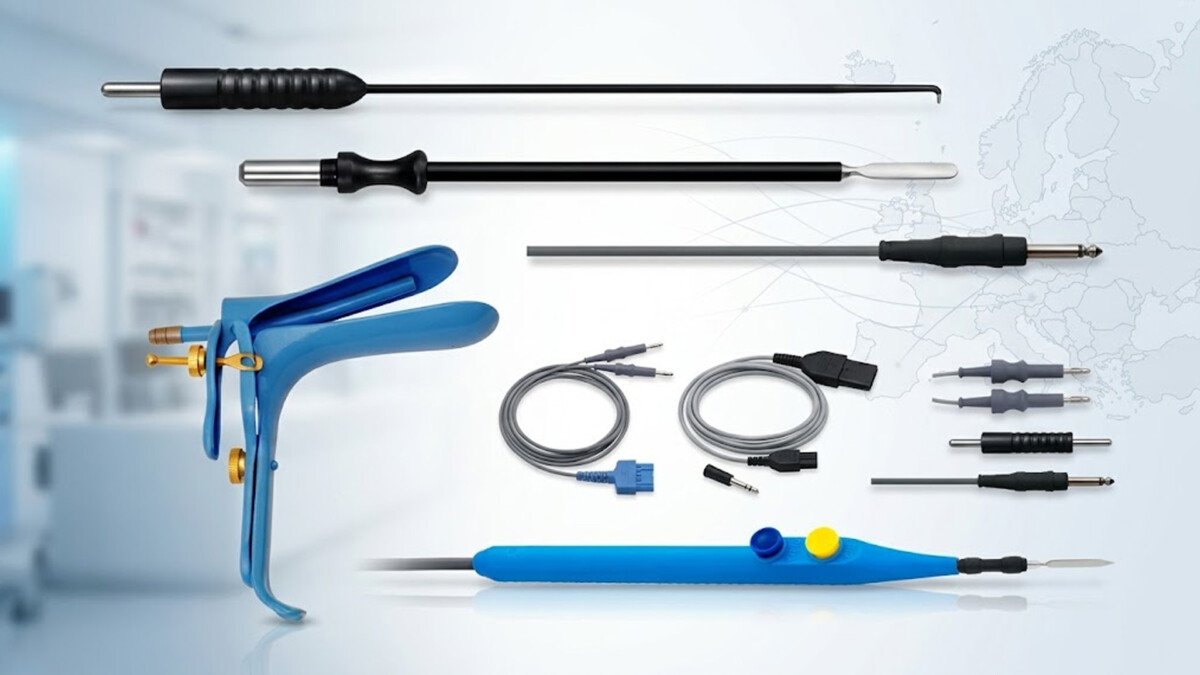
 A professional supplier-evaluation framework for procurement teams, distributors and surgical product manufacturers
Hospitals do not select a surgical instrument supplier solely because the required product appears in a catalogue. Professional procurement teams also evaluate specification accuracy, documentation, compatibility, product consistency, supply communication, sample approval and whether repeat orders can be matched reliably to the products originally reviewed.
Hospitals choose surgical instrument suppliers by assessing product suitability, specification clarity, documentation, supply consistency, compatibility information and commercial responsiveness. A supplier becomes easier to approve when the hospital can trace every sample, quotation and repeat order to a clearly defined product reference.
Product Suitability Comes Before Supplier Size
A large catalogue does not automatically make a supplier more useful to a hospital.
The first purchasing question is whether the supplier offers the precise categories required by the surgical department.
For electrosurgical and minimally invasive purchasing, these categories may include:
- single-use HF instruments;
- bipolar forceps;
- non-stick bipolar forceps;
- monopolar electrodes;
- laparoscopic HF instruments;
- single-use MIS instruments;
- suction-irrigation products;
- HF cables and accessories; and
- reusable HF instruments where required.
Seemann Technologies organises its product structure around single-use HF instruments, single-use MIS instruments and reusable HF products.
Hospitals Need Precise Product Information
A professional procurement team should be able to distinguish one product from the next without depending on photographs or informal descriptions.
Useful information may include:
- product reference;
- instrument pattern;
- working length;
- tip, jaw or electrode geometry;
- shaft diameter;
- monopolar or bipolar modality;
- connection arrangement;
- single-use or reusable status;
- sterile presentation where applicable; and
- packaging information.
Seemann procurement insight: Supplier evaluation becomes more reliable when the hospital can trace the same product reference through the catalogue, sample, quotation, documentation and repeat purchase order.
Documentation Is Part of Supplier Qualification
Product documentation should be requested early rather than after commercial terms have already been agreed.
Depending on the device and purchasing process, hospitals or distributors may need:
- product specifications;
- intended-use information;
- instructions for use;
- sterile packaging information;
- labelling details;
- compatibility information;
- applicable conformity documentation; and
- quality-system information.
Seemann Technologies provides a dedicated quality information page, while device-specific documentation should be requested for the exact products under review.
Compatibility Is Critical for Electrosurgical Products
Hospitals purchasing electrosurgical instruments need more information than general category descriptions.
A bipolar forceps may depend on a defined cable. A monopolar electrode may require a particular shaft or handpiece interface. A cable must correspond with both the instrument and the intended HF equipment.
A strong supplier should be able to discuss:
- instrument-side connection;
- equipment-side connector;
- cable reference;
- equipment manufacturer and model;
- product dimensions; and
- related instrument requirements.
Compatibility should be documented rather than assumed from physical appearance.
Hospitals Evaluate Samples Before Routine Supply
Sample evaluation is valuable when it is connected to a controlled product specification.
A hospital may use samples to compare:
- instrument dimensions;
- working-end configuration;
- packaging;
- connection arrangement;
- product identification; and
- the documentation supplied with the item.
If the commercial product differs from the evaluated sample, the difference should be clearly identified before routine purchasing begins.
Supply Communication Influences Long-Term Purchasing
Hospitals need to know that an approved instrument can be reordered accurately.
This makes several supplier capabilities commercially important:
- clear quotations;
- consistent catalogue references;
- accurate product descriptions;
- communication about product changes;
- repeat-order support;
- forecast discussion; and
- responses to technical documentation requests.
Medical distributors place particular value on this because they must answer hospital questions accurately before and after the first sale.
A Connected Surgical Range Can Simplify Procurement
Operating-room requirements often involve several related instrument categories.
For example, a hospital reviewing HF and MIS products may need:
- bipolar forceps;
- monopolar electrodes;
- bipolar cables;
- laparoscopic MIS instruments;
- suction-irrigation instruments; and
- reusable HF accessories.
Being able to discuss related categories with one supplier can simplify communication, although each product still requires its own technical and regulatory review.
What Hospitals in Belgium Should Check
Belgian hospitals and distributors should ensure that applicable economic-operator responsibilities are understood within the supply chain. The FAMHP publishes current requirements for medical-device distribution and import activities in Belgium.
For example, distributors operating under the applicable Belgian framework should review their FAMHP registration obligations, while importers should verify current EUDAMED requirements.
What Buyers in Spain Should Check
Spanish distributors and procurement organisations should review current AEMPS requirements before commercialising devices in Spain.
AEMPS maintains the national RECOPS system for economic operators marketing medical devices in Spanish territory. Product documentation, labelling and applicable registration/commercialisation obligations should therefore be included in supplier qualification.
What Buyers in Ireland Should Check
Irish distributors and importers should determine their economic-operator role before establishing the applicable registration pathway.
HPRA currently requires distributors established in Ireland to register nationally, while importers have role-specific registration obligations involving EUDAMED.
Hospital Supplier Evaluation Checklist
- Does the supplier offer the exact instrument categories required?
- Are product references clearly controlled?
- Can dimensions and configurations be supplied in writing?
- Is relevant documentation available?
- Can electrosurgical compatibility questions be addressed?
- Can the hospital evaluate samples against a defined reference?
- Are packaging and sterile status clearly identified?
- Can approved products be reordered reliably?
- Can the supplier discuss recurring quantities?
- Can changes to products or references be communicated clearly?
Frequently Asked Questions
What do hospitals look for in a surgical instrument supplier?
Hospitals typically assess product suitability, specifications, documentation, compatibility, packaging, supply continuity and the supplier’s ability to support repeat purchasing.
Why are samples important in hospital procurement?
Samples allow hospital teams to compare a physical instrument with the specification and reference that will later be purchased.
What should distributors ask a manufacturer before presenting products to hospitals?
They should request clear product references, specifications, documentation, packaging information, compatibility details and commercial quantities.
Why does electrosurgical compatibility matter?
Forceps, electrodes and cables may depend on specific interfaces and equipment connections, so compatibility should be confirmed for the exact system.
Should hospitals use one supplier for every surgical category?
Not necessarily. Supplier selection should be based on the suitability and reliability of each product category rather than catalogue breadth alone.
What makes repeat supply easier?
Controlled product references, clear specifications, stable communication and accurate order history make it easier to reorder the same approved configuration.
Discuss Hospital and Distributor Supply
Hospitals, healthcare procurement organisations and medical distributors can review Seemann Technologies’ complete surgical product range, single-use HF instruments and MIS categories. For catalogue information, samples, documentation or quotations, contact Seemann Technologies.