
 A practical route from product selection to a complete, compatible supply enquiry
Electrosurgical procurement rarely concerns one instrument in isolation. A hospital may need a bipolar forceps pattern that suits its established preference, a distributor may be building a coherent single-use range, and both may need to confirm how the instrument connects to existing HF equipment. The useful starting point is therefore not a long list of products, but a clear understanding of how the instrument, cable, connector and equipment interface belong together.
Electrosurgical instruments include products such as bipolar forceps, monopolar electrodes, HF handles and the cables or connectors used to integrate them with compatible electrosurgical equipment. Professional buyers should compare the intended product family, physical configuration, single-use status and documented connection requirements before requesting samples or a quotation.
What professional buyers mean by electrosurgical instruments
The term covers instruments used with high-frequency electrical energy systems, but it should not be treated as a synonym for an electrosurgical generator. The generator provides the energy source; the instrument and its connected accessories form the working interface selected for the intended application. That distinction matters when specifications, catalogues and quotations are being compared.
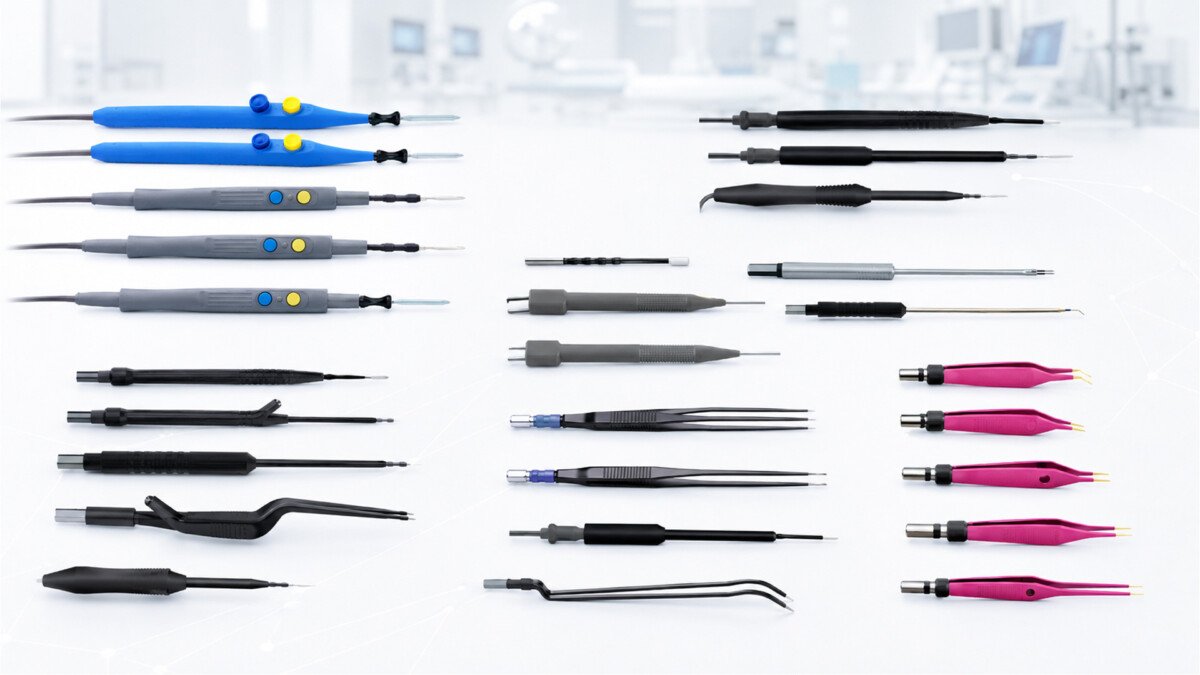
Seemann Technologies focuses on single-use HF instruments and related product families. The published range includes bipolar forceps, monopolar electrodes and bipolar forceps cables, while the company’s wider technology information also identifies HF handles with cables and electrodes and instruments for minimally invasive surgery.
For procurement teams, the commercial question is not simply “Which electrosurgical instrument do we need?” A more productive question is: “Which instrument configuration, connection and supply format fits the product reference already used by the clinical team?”
Core product families in the Seemann Technologies range
Bipolar forceps
Seemann’s single-use bipolar forceps range includes straight, angled-tip and bayonet patterns. Published options also include non-stick versions, forceps supplied with a 5 m cable and 2-pin connector, and an irrigation configuration. These are meaningful product distinctions, not interchangeable descriptions.
A buyer comparing forceps should record the preferred pattern, total length, tip details, non-stick requirement and cable arrangement. If an existing reference is being replaced, supplying that reference and clear connector photographs can make the compatibility discussion considerably more precise.
Monopolar and specialised electrodes
The published monopolar electrode selection covers short and long products with different shaft diameters, alongside arthroscopic, tungsten and conisation configurations. The same product area also lists sterile bipolar electrodes with a 5 m cable for ENT.
Electrodes should be identified as electrodes, not forceps. Buyers should distinguish energy modality, electrode or tip form, shaft diameter, working or total length, connector and cable requirement. A category name alone is rarely enough to identify the correct reference.
Bipolar forceps cables
A cable completes the connection between the bipolar instrument and compatible HF equipment. Seemann lists single-use bipolar forceps cables with 5 m lengths and different connector arrangements, including a Euro flat connector and an angled connector in the published product selection.
The company’s technical overview describes further equipment-side connector examples. Those examples should guide a compatibility enquiry, not replace reference-level confirmation. Procurement teams should always verify both ends of the connection and the relevant equipment documentation before ordering.
HF handles with cables and electrodes
Some markets use terms such as cautery pencil, electrosurgical pencil or diathermy pencil. Seemann’s published terminology is HF handles with cables and electrodes. Preserving that terminology reduces the risk of labelling a product according to a familiar market phrase that does not accurately describe the available reference.
When enquiring about an HF handle, specify the required control arrangement, electrode connection, cable length and equipment-side connector. Availability of any precise configuration should be confirmed against the current catalogue or product specification.
Electrosurgical products for minimally invasive surgery
Seemann also publishes a single-use MIS instrument range covering product families such as bipolar dissection and grasping forceps, bipolar scissors, monopolar instruments, laparoscopic monopolar electrodes and suction or irrigation products. These products belong to a wider minimally invasive portfolio and should be selected against their own dimensions and compatibility requirements.
How the product families differ
| Product family | Main selection questions | Connection information to confirm |
| Bipolar forceps | Straight, angled-tip, bayonet, non-stick, cable-connected or irrigation configuration | Instrument interface, cable type and equipment-side connector |
| Monopolar electrodes | Electrode form, shaft diameter, shaft or total length and intended product category | Handle interface and connection to compatible HF equipment |
| ENT bipolar electrodes | Exact electrode design, cable arrangement and product reference | Supplied cable and equipment-side connector |
| Bipolar forceps cables | Length, instrument-side connection and equipment-side plug | Both connection ends and equipment model/reference |
| HF handles | Control arrangement, electrode interface and supply format | Cable length, plug geometry and equipment compatibility |
Compatibility begins with identification, not assumption
Connector families may look familiar while differing in dimensions, orientation or intended equipment interface. A description such as “standard bipolar cable” can therefore create avoidable ambiguity. The strongest enquiries identify the generator or HF unit by manufacturer and model, name the current instrument or cable reference, and include photographs where the reference marking is difficult to read.
Compatibility also has a physical and commercial side. A connector may appear suitable, but the buyer still needs the manufacturer’s current documentation for the proposed combination. Seemann’s bipolar cable technology information is a useful introduction to available connector families; final selection should be confirmed for the exact instrument and equipment reference.
Seemann procurement insight: Compatibility enquiries are easier to evaluate when the buyer provides the existing HF equipment reference, the current instrument or cable reference and clear images of both connection points in one message.
Why single-use format matters in a buying decision
Single-use supply changes the practical comparison. Instead of assessing only purchase price, hospitals may also review sterile presentation, storage, stock rotation, disposal arrangements and the internal work associated with reusable instrument cleaning, inspection and reprocessing. The relevant balance will differ by organisation and product family.
For distributors, the format affects forecasting and customer support. Clear product references, case quantities, packaging information and documentation availability help sales teams present the range accurately. No assumption should be made about sterility, shelf life or pack configuration across an entire category; those details need confirmation for the individual reference.
A buyer checklist for electrosurgical instrument enquiries
- Name the product family. State whether the request concerns bipolar forceps, an electrode, an HF handle, a cable or a minimally invasive instrument.
- Describe the physical configuration. Include pattern, tip form, shaft diameter, length and any non-stick, angled or bayonet requirement.
- Identify the connected equipment. Provide the HF equipment manufacturer, model and connection details.
- Record the current reference. An existing instrument, cable or competitor reference can help clarify the intended configuration.
- Confirm the supply format. Ask for the current packaging, sterile status, shelf-life information and order configuration for the exact reference.
- Request documentation. Identify the specifications and conformity documents required by the hospital, importer or distributor.
- Explain the commercial requirement. Include destination market, estimated demand, sample needs and whether the enquiry concerns routine or distributor supply.
Documentation professional buyers may need
Product evaluation commonly includes specifications, labelling information, instructions for use where applicable, packaging details and current conformity documentation. The precise documents depend on the product and the buyer’s role in the supply chain. Seemann’s quality information provides company-level context, while current reference-specific evidence should be requested during the commercial review.
Distributors and importers should also establish who is responsible for translations, market-specific labelling, traceability information and post-market communication. These points are best addressed before the first order rather than after a customer has requested documents on a tight deadline.
Building a coherent electrosurgical range
A coherent portfolio helps a distributor answer connected questions. A hospital enquiring about bipolar forceps may also need the corresponding cable; a buyer reviewing HF handles may need compatible electrodes; a laparoscopic account may be considering a wider combination of HF and MIS instruments.
The complete Seemann product overview separates products into single-use HF instruments for open surgery, single-use HF instruments for minimally invasive surgery and reusable HF instruments. That structure is useful for portfolio planning because it keeps distinct product groups visible without implying that every product is compatible with every system.
Different buyers need different information from the same product record
A clinical user, biomedical engineering team, procurement department and distributor may all review the same instrument from a different angle. The product record should be detailed enough to support each role without turning commercial content into surgical guidance.
Clinical stakeholders
Clinical stakeholders commonly define the expected pattern, dimensions, handling configuration and existing reference. Their input establishes which product characteristics are essential, but any change should still pass through the hospital’s normal approval process.
Procurement and supply-chain teams
Procurement teams need a stable catalogue reference, packaging information, current commercial terms and a clear route for repeat ordering. They may also need to understand whether an instrument is supplied with its cable or whether two references must be ordered together.
Biomedical or technical teams
Technical reviewers focus on the installed HF equipment, connector interfaces and evidence supporting the proposed combination. Their work is easier when product names and model numbers are supplied in full.
Medical-device distributors
Distributors need information they can communicate consistently across sales, regulatory, warehouse and customer-service functions. Separating product attributes into structured fields helps prevent a country sales team from shortening a product description until an important feature disappears.
Using samples as part of a controlled commercial evaluation
A sample request is most useful when it has a defined purpose. State which reference is being evaluated, which documented attributes are being compared, who will review the product and what information must accompany it. Sample availability, supply conditions and any evaluation documentation should be confirmed directly.
A sample does not by itself establish compatibility or approval. The organisation should retain the relevant specification, connection evidence and internal decision record so that a later commercial order matches the evaluated product.
Once a reference is approved, use its full catalogue identifier in quotations, purchase orders and repeat-supply records. If the instrument, cable or installed HF equipment changes, review the connected combination again instead of relying on the earlier decision.
Frequently Asked Questions
What are electrosurgical instruments?
They are instruments and connected accessories used with compatible HF energy systems. Examples include bipolar forceps, monopolar electrodes, HF handles and bipolar forceps cables.
Does Seemann Technologies manufacture electrosurgical generators?
The verified Seemann range reviewed for this guide concerns HF and MIS instruments and connected accessories. Generator manufacture should not be inferred; equipment references are used to evaluate compatibility.
What is the difference between bipolar forceps and a monopolar electrode?
They are different instrument categories with different energy paths and connection requirements. Procurement records should preserve the exact product type rather than using “forceps” and “electrode” interchangeably.
Can a cable be selected from the connector name alone?
No. Buyers should confirm the instrument-side interface, equipment-side connector, cable length and exact equipment reference. Current manufacturer documentation should support the final selection.
Which details are useful when requesting a quotation?
Include the product family, configuration, equipment model, connector details, current reference, required documentation, destination country and expected quantity. State separately if samples are required.
Are all Seemann electrosurgical products single-use?
Seemann publishes both single-use product families and a reusable HF category. The intended-use and supply status should be confirmed for each specific reference.
Where can buyers discuss compatibility or distributor supply?
Hospitals, surgical suppliers and medical-device distributors can use the Seemann Technologies contact form to request product information, specifications, catalogue support or a quotation.
Discuss Your Product Requirements
To discuss an electrosurgical instrument requirement, send Seemann Technologies the product type, preferred configuration, existing HF equipment reference, connector information, target market and estimated demand. The team can then focus the conversation on relevant product information, compatibility questions and the documentation needed for a commercial evaluation.
Request product information or discuss an electrosurgical supply requirement.