
⚡ The word “electrode” identifies the product family. Tip geometry, shaft, length and connection identify the configuration a professional buyer actually needs.
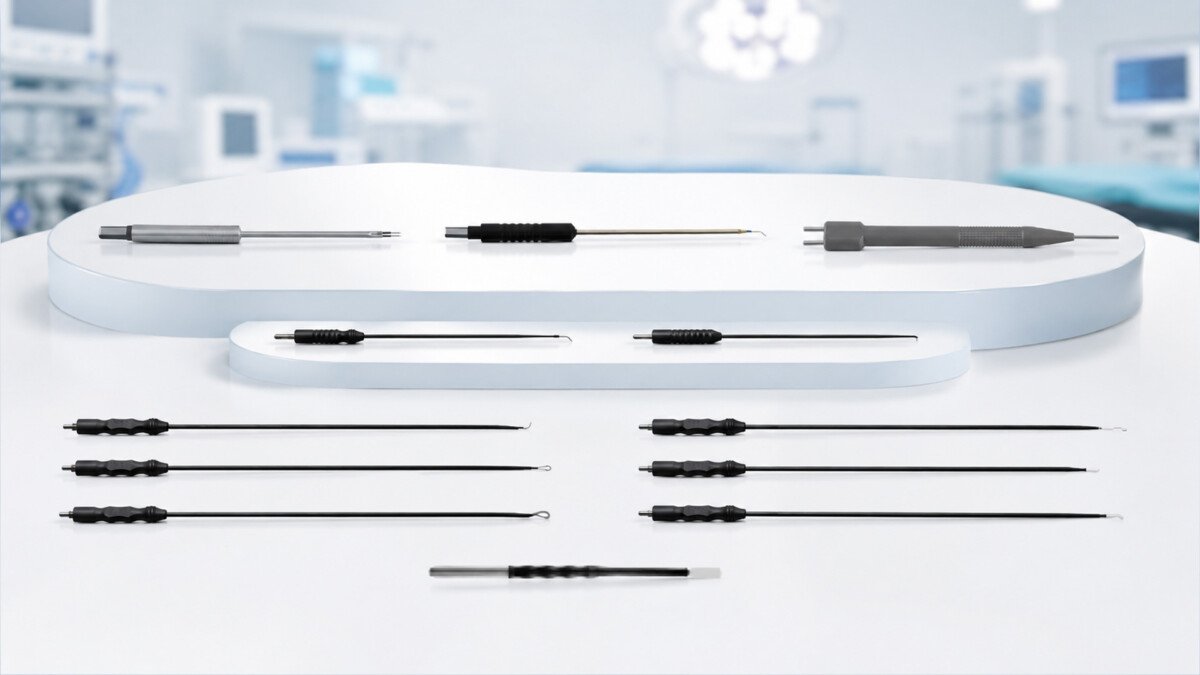
A Diathermy Electrode enquiry becomes more useful when the product requirement is translated into clear technical characteristics. Electrode type, working-end geometry, shaft diameter, length and connection can all influence which reference should be reviewed.
Seemann Technologies presents a broad range of single-use electrode categories within its HF instrument portfolio, including short and long monopolar electrodes, different shaft diameters, arthroscopic electrodes, tungsten electrodes, conisation electrodes and bipolar electrodes with cable for ENT applications.
The purpose of this guide is not to recommend a clinical technique. It is to help distributors and professional procurement teams communicate an existing product requirement accurately.
Start With the Current Product Reference
The strongest starting point is the product reference already approved or used by the healthcare organisation.
An existing reference can establish several technical requirements at once and provides a more objective basis for comparison than a broad term such as Active Electrodes.
Where no reference is available, the important characteristics should be recorded individually.
Identify Whether the Requirement Is Monopolar or Bipolar
Monopolar and bipolar electrodes should not be treated as interchangeable product descriptions.
Seemann Technologies currently presents monopolar electrodes alongside a specific single-use bipolar electrode category with cable for ENT.
The first procurement step should therefore be to state the required product family clearly.
Monopolar Diathermy Electrode Configurations
Within the Seemann product range, single-use monopolar electrodes are currently organised into several groups.
Published categories include:
- Short monopolar electrodes with a 2.4 mm shaft
- Long monopolar electrodes with a 2.4 mm shaft
- Short monopolar electrodes with a 4 mm shaft
- Long monopolar electrodes with a 4 mm shaft
- Arthroscopic electrode configurations
- Tungsten electrode options
- Conisation electrode configurations
- Bipolar electrodes with cable for ENT
This product depth demonstrates why a quotation should identify more than the keyword Diathermy Electrode.
Electrode Tip Geometry Should Be Specified Clearly
The working end is one of the most important product-identification characteristics.
Depending on the exact range, electrodes may be described by a particular working tip or distal form. The buyer should reproduce the terminology from the current product specification rather than simplifying several different designs into the same generic description.
A request that states the existing reference and exact tip geometry gives the supplier a much stronger technical starting point.
Why Electrodes Shaft Diameter Matters
The keyword Electrodes Shaft reflects a genuine procurement consideration.
Seemann’s live monopolar electrode category currently includes products organised around 2.4 mm and 4 mm shaft sizes.
The required shaft diameter should therefore be stated explicitly whenever it forms part of the approved product specification.
A buyer should not estimate shaft diameter from photographs or assume that different electrodes use the same shaft merely because their tips appear similar.
Short and Long Electrode Configurations
Seemann Technologies distinguishes between short and long monopolar electrode categories.
When the required length is known, procurement teams should state the exact reference or measurement defined in the technical specification.
Words such as “short” and “long” are useful for navigating a product family, but they should not replace the exact measurements needed for final product identification.
Arthroscopic Electrode Options
An Arthroscopic Electrode should be specified as its own product configuration rather than being grouped automatically with a general monopolar electrode request.
Seemann’s current product structure includes single-use monopolar arthroscopic electrodes in both 2.4 mm and 4 mm shaft categories.
Where an arthroscopic configuration is required, the buyer should confirm the product reference, shaft specification, distal configuration and connection information.
Any additional intended-use information should be taken from the approved product documentation for the exact reference.
ENT Bipolar Electrode With Cable
Seemann Technologies also lists a single-use bipolar electrode with a 5 m cable for ENT within its current electrode category.
This should not be confused with a general monopolar electrode.
If the procurement requirement relates to an ENT Bipolar Electrode, the buyer should record:
- The exact reference
- Electrode geometry
- Cable configuration
- Required equipment connection
- Relevant dimensions
- Required product documentation
Tungsten Electrode Configurations
The current Seemann range also includes a single-use isolated monopolar tungsten electrode category with a 4 mm shaft.
Where tungsten is part of the required specification, this should be recorded explicitly.
The material description should not be treated as an optional marketing term because it may form part of the defined product reference.
Conisation Electrodes
Conisation electrodes are also represented in the current Seemann product structure with 2.4 mm and 4 mm shaft categories.
This is another example of why a central Diathermy Electrode guide should direct buyers toward specific product families instead of pretending that one generic electrode can satisfy every requirement.
Laparoscopic Electrodes Require Their Own Specification
Laparoscopic Electrodes belong within a minimally invasive product context and may have different dimensional and working-length requirements from electrodes intended for other configurations.
Seemann Technologies includes monopolar electrodes for laparoscopy within its wider single-use MIS instruments portfolio.
For a laparoscopic enquiry, buyers should provide the exact reference or documented length, shaft, distal configuration and connection requirements.
Connection Should Be Confirmed, Not Assumed
The word “compatible” can easily become too broad in electrosurgical content.
A more reliable procurement approach is to identify the relevant handle, cable, connector or HF equipment and request reference-level confirmation.
If the healthcare organisation already uses an approved handle or equipment system, include that information with the enquiry.
This gives the supplier an objective basis for checking the required configuration.
Single Use Active Electrodes and Packaging Information
Where the requirement concerns single use Active Electrodes, procurement teams may also need information about sterile presentation, packaging, shelf life, storage and product identification.
These details should be obtained for the exact reference under review.
A general page should not assume that every electrode has identical packaging simply because it belongs to a single-use product category.
Diathermy Electrode Specification Checklist
| Specification Area | Buyer Requirement |
|---|---|
| Product family | Monopolar, bipolar, arthroscopic, ENT or laparoscopic |
| Reference | Existing or required product number |
| Tip geometry | Exact working-end specification |
| Shaft | Required shaft diameter and configuration |
| Length | Exact defined measurement |
| Cable | Integrated, separate or not applicable |
| Connection | Handle/equipment connection information |
| Quantity | Expected purchasing requirement |
| Documentation | Technical and quality information needed for review |
Product Images Should Support Technical Selection
Clear images can improve an electrode page considerably when they help the buyer understand what is being shown.
Useful product imagery may include:
- A complete view of the electrode
- A close-up of the distal tip
- The shaft
- The proximal connection
- Several genuine references shown side by side where appropriate
Image ALT text should describe the actual product rather than becoming another place to repeat country keywords.
Avoid Creating Duplicate Electrode Pages
A strong central Diathermy Electrode guide can explain how the product family is specified.
Additional pages should only be created when the product category genuinely has enough unique technical information and search intent to deserve a separate URL.
For example, an arthroscopic page should contain real arthroscopic product information. An ENT page should contain actual ENT product references. A laparoscopic page should reflect the real laparoscopic range.
Changing only the keyword while repeating the same generic content is not a strong SEO strategy.
Frequently Asked Questions About Diathermy Electrodes
Which monopolar electrode shaft sizes are currently listed by Seemann Technologies?
The current product category includes 2.4 mm and 4 mm shaft groups across several monopolar electrode configurations.
Does Seemann Technologies list arthroscopic electrodes?
Yes. The current category includes single-use monopolar arthroscopic electrode options in 2.4 mm and 4 mm shaft groups.
Does Seemann Technologies provide an ENT bipolar electrode?
The current electrode category lists a single-use bipolar electrode with a 5 m cable for ENT. The exact reference and connection requirements should be confirmed before ordering.
What should a buyer include in a diathermy electrode enquiry?
Provide the current reference if available, along with electrode type, tip geometry, shaft specification, length, cable or connection information, quantity and required documentation.
Request Diathermy Electrode Specifications
Seemann Technologies provides multiple single-use electrode categories within its wider HF and MIS instrument portfolio.
For a focused product discussion, provide the current reference or the required tip, shaft, length and connection information.